When Dogs Won't Share: Targeted Fixes for All Resource Guarding Behaviors
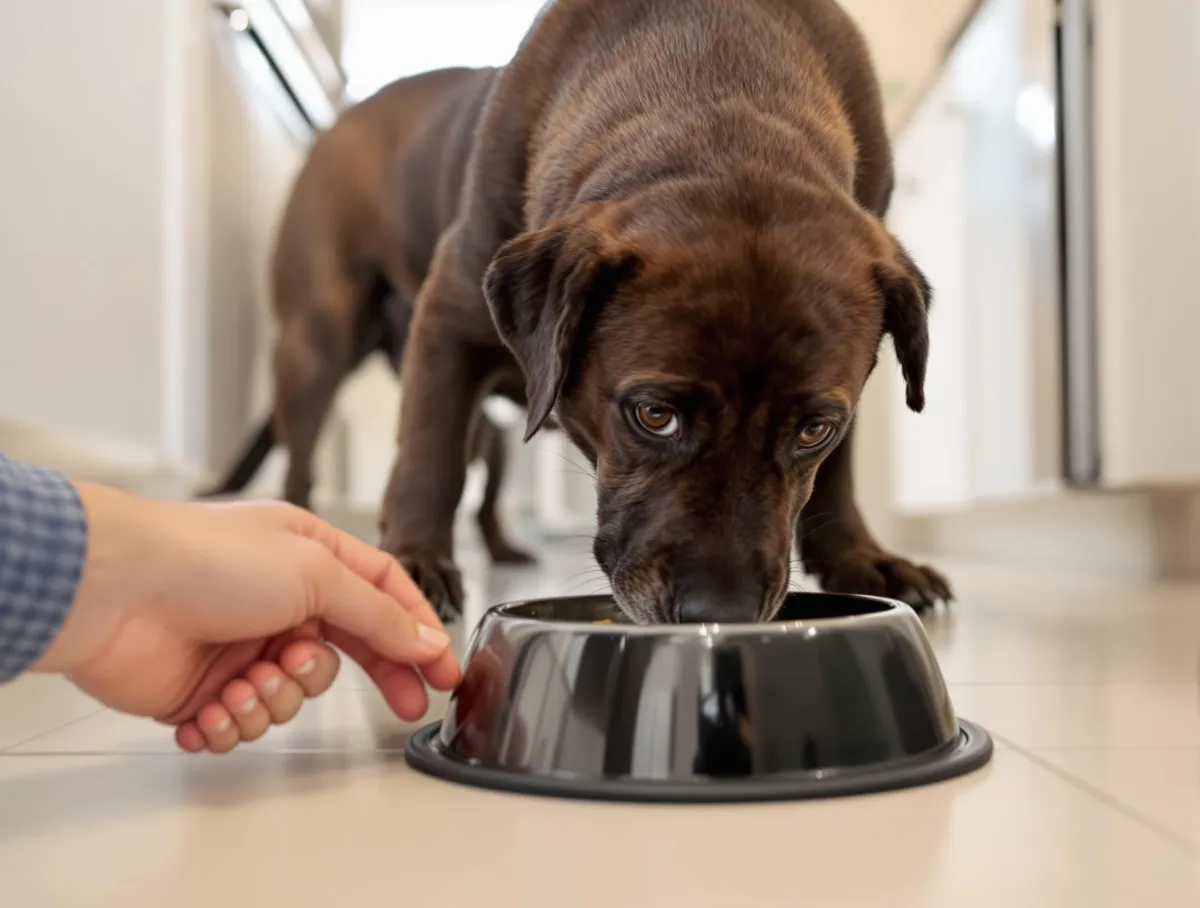
Picture this: You reach to take your dog's empty food bowl, and suddenly your normally loving companion freezes, gives you a hard stare, and growls. Or maybe your pup is on the couch when your child approaches, and your dog curls a lip. Perhaps you've seen your dog clutching a toy, frantically moving away when anyone comes near.
If these scenarios sound familiar, you're dealing with resource guarding—and you're not alone. As a trainer working with hundreds of Metro Detroit families each year, I can tell you that resource guarding ranks among the top five issues that bring worried owners through our doors.
The good news? This behavior isn't a reflection of your dog's love for you, their "dominance," or even poor training. It's actually a natural canine behavior that, with the right approach, can be significantly improved or even completely resolved.
In this comprehensive guide, we'll explore all forms of resource guarding—going far beyond just food bowl aggression—and provide specific, proven solutions for each type. Let's dig in and get your household harmony back.
Understanding Resource Guarding: More Than Just Food Aggression
What Does Resource Guarding Actually Look Like?
Resource guarding exists on a spectrum, from mild to severe:
Mild signs include:
Stiffening when you approach their resource
Eating faster when someone comes near
Quietly moving away with a valued item
Whale eye (showing the whites of their eyes while watching you)
Moderate signs include:
Growling when approached
Freezing with tension
Snapping in the air as a warning
Blocking access to the item with their body
Severe signs include:
Lunging when approached
Biting without much warning
Aggressively charging to maintain distance
Unable to be distracted from guarding behavior
📌 Important note: Many Metro Detroit clients tell me, "He only does it sometimes, so I know he can control it." This inconsistency actually makes the behavior more dangerous, not less, as it becomes less predictable.
The Root Causes of Guarding Behaviors
Contrary to popular belief, resource guarding isn't about "dominance" or your dog trying to be "alpha." Instead, it typically stems from:
Insecurity and anxiety - Your dog doesn't trust that resources will remain available
Past experiences - Particularly common in rescue dogs from overcrowded situations
Inadvertent reinforcement - When we back away from a growl, we unintentionally reward the behavior
Genetics - Some breeds and individual dogs are more predisposed to guarding
Lack of impulse control - The dog hasn't learned to manage their emotional responses
Last winter, I worked with "Maxwell," a sweet Labrador from Grosse Pointe who would lunge at anyone approaching during meals. His owners were perplexed because he'd been raised in their loving home since puppyhood with no history of food scarcity. Through our assessment, we discovered Maxwell had naturally high resource concerns that were unintentionally reinforced when his family backed away from his bowl after his first mild growl as a puppy.
Why Traditional Approaches Often Fail (or Make Things Worse)
I've seen countless Metro Detroit families try these common approaches before seeking professional help:
❌ Taking the bowl away repeatedly to "show the dog who's boss" - This typically escalates guarding by confirming the dog's fear that resources will be taken.
❌ Punishing the growl or warning signs - This often creates a dog who skips warning signs and goes straight to biting—like removing the tick of a bomb but leaving the explosion.
❌ Hand-feeding exclusively - While this can help in some cases, it doesn't address the underlying issue and can create dependency.
❌ Avoiding the problem - Just leaving your dog alone with resources might prevent conflict but doesn't resolve the underlying issue.
The most effective approach combines management, systematic desensitization, and building a stronger foundation of trust and impulse control—exactly what we'll cover in the following sections.
Food Guarding: From Growls to Peaceful Mealtimes
The Warning Signs of Food Guarding
Food guarding often shows up first around high-value items. Pay particular attention if your dog:
Eats faster when you approach
Hunches over their bowl protectively
Carries food away from their bowl to eat
Gives hard stares if you come near during meals
These early signs are actually gifts—they tell you intervention is needed before the behavior escalates to growling or biting.
The Bowl Approach Protocol
Here's the step-by-step protocol we use with our Metro Detroit clients to address food guarding:
Stage 1: Building Positive Associations
Begin by announcing mealtime with a consistent phrase like "dinner time!"
Place your dog's empty bowl on the floor
Add a small handful of regular food
Step back and allow them to eat
As they finish, approach and add something better than their kibble (like a piece of chicken)
Repeat 5-6 times per meal
Stage 2: Teaching Value in Your Approach
Once comfortable with Stage 1, place the bowl down with a small amount of food
Stand a few feet away with something high-value in your hand, visible to the dog
Take one step toward the bowl and toss the high-value treat into the bowl
Gradually decrease the distance over several days until you can stand right next to the bowl
Practice for at least 10 days before moving to Stage 3
Stage 3: Teaching Tolerance of Touch
Begin with the bowl on the floor with a small amount of food
Approach with high-value treats in hand
Reach toward the bowl (not touching yet) and drop in the treat
Over several sessions, progress to briefly touching the bowl while dropping in treats
Gradually increase the duration of touch
Stage 4: Teaching Food Transfers
Place the bowl with food on the ground
Approach and pick up the bowl briefly
Add something amazing to the bowl and return it
Gradually increase the time you hold the bowl
Practice until your dog shows happy anticipation when you approach their bowl
💡 Pro Tip: For this entire process to work, what you add to the bowl must be perceived by YOUR dog as better than what's already in there. For some Detroit dogs I've worked with, that means using real meat or cheese, not just a different kibble.
Advanced Techniques for Severe Cases
For more severe food guarding cases, like "Bella," a Goldendoodle from Royal Oak who would snap if anyone came within 5 feet of her while eating, we add these elements:
Barrier work: Using baby gates initially to create safe distance during the early stages
Pattern interruption: Changing the feeding location, bowl type, and routine to break established guarding patterns
Systematic counterconditioning: Using a clicker to mark the moment your dog sees you approach, followed immediately by high-value food delivery
Structured mealtime routine: Creating a ritual that builds calmness and predictability
With Bella, we discovered that establishing a pre-meal "place" command and a clear release to eat dramatically reduced her anxiety around meals. Within three weeks, her owners could approach, touch her, and even temporarily remove her bowl—all without any signs of stress.
"We were at our wits' end with our dog's resource guarding. She had bitten my husband over a bone, and we were considering rehoming her. Working with Clever Canine completely transformed our household. Their step-by-step approach helped us understand why he was guarding and gave us the exact tools we needed. Within three weeks, she was willingly trading items and allowing us near his food bowl. It's like we have a different dog!"
- Jennifer K., Royal Oak
Toy & Object Guarding: Creating a Willing Sharer
High-Value vs. Low-Value Item Differences
Not all items are guarded equally. During our evaluations, I've noticed clear patterns:
Commonly guarded low-value items:
Basic plush toys
Tennis balls
Dog beds
Empty food bowls
Frequently guarded high-value items:
Bully sticks and long-lasting chews
Stolen household objects (socks, tissues)
Squeaky toys (particularly for terriers)
Recently discovered items
Understanding your dog's personal hierarchy of items helps determine where to start training. Always begin with the least valuable guarded items to build success before tackling the most precious resources.
The Trading Game Strategy
The Trading Game is our most successful protocol for toy guarding. Here's how we implement it with Metro Detroit families:
Step 1: Two-Toy Introduction
Begin with two identical, medium-value toys
Give your dog one toy and keep the second visible
Make the toy in your hand move enticingly
When your dog shows interest in your toy, mark with "yes" or a clicker
As they drop their toy to come get yours, say "trade" and give them the new toy
Pick up the discarded toy and repeat
Step 2: Value Ladder
Once comfortable with identical toys, create a value ladder (toys ranked from least to most interesting)
Begin trading a lower-value toy for a higher-value one
Practice until your dog eagerly drops their toy when they hear "trade"
Gradually work up to trading high-value items
Step 3: Equal Value Trading
Now practice trading for items of equal value
Next, occasionally trade for something slightly less valuable (but follow up with a bonus treat)
Build unpredictability into the trades while keeping it a net positive experience
Step 4: Real-life Application
Apply the trading game when your dog finds something they shouldn't have
Use the command in everyday interactions to maintain the skill
One Clinton Township family I worked with had a Lab mix named "Rex" who would guard stolen socks with growing intensity. After three weeks of consistent trading games, Rex began bringing stolen items directly to his owners, dropping them at their feet while expectantly waiting for his "trade." What was once a confrontation became a willing exchange!
Managing Toy Guarding in Multi-Dog Households
In multi-dog homes toy guarding requires additional protocols:
Resource mapping: Identify which dog guards which items from which family members or other pets
Controlled access: Initially separate dogs during high-value chew time
Individual trading skills: Teach each dog the trading game separately before working together
Structured resource time: Implement specific toy times with supervision and separate resting spots
Value abundance strategy: Having multiple high-value items simultaneously can reduce conflict
"Milo and Luna," a pair of mixed breeds from Sterling Heights, transformed from serious resource fighters to peaceful cohabitants through our Canine Connection Compass approach. Their owners discovered that Luna only guarded toys when feeling insecure about her relationship with the family, so we focused heavily on the relationship pillar first, then added clear boundaries and communication around resources.
Space Guarding: Reclaiming Your Couch and Bed
Why Dogs Guard Resting Spaces
Space guarding is particularly common in Detroit's urban apartments and smaller homes where space is at a premium. Dogs guard spaces for several reasons:
Comfort defense: Premium resting spots are worth protecting
Territorial instinct: Natural inclination to control access to important areas
Status confusion: Inconsistent rules about furniture access
Anxiety manifestation: Controlling space provides security
"Cooper," a rescue from Detroit who aggressively defended the couch from both humans and the resident cat, provides a perfect example. His space guarding actually intensified during the harsh Michigan winter when everyone spent more time indoors competing for the same cozy spots.
The "Place" Command as a Foundation
Before addressing space guarding, we establish a strong "place" command:
Designate a specific dog bed or mat as your dog's "place"
Use high-value rewards to teach your dog to go to and stay on their place
Practice sends to place from increasingly further distances
Build duration gradually, beginning with 5 seconds and working up to 30+ minutes
Add distractions incrementally
Practice place during naturally exciting times (when doorbell rings, during dinner prep)
Only after this foundation is solid do we address the space guarding directly.
Boundaries That Build Confidence
For space guarding, we implement our 3-5-7 Boundary Method:
Phase 1: Three-Second Rule
Call your dog off the guarded space
Reward generously for compliance
Allow them to return after just 3 seconds
Repeat 5-10 times in short sessions
Phase 2: Five-Minute Separation
Progress to having your dog hold a place command away from the guarded area for 5 minutes
Reward calm behavior away from the guarded space
Provide an equally comfortable alternative
Allow return after consistent success
Phase 3: Seven-Day Consistency
Implement consistent rules about furniture access
Use baby gates or tethers initially if needed for safety
Maintain the rules for a minimum of 7 days without exceptions
After 7 days, you can begin controlled, invited access to previously guarded spaces
With Cooper, we discovered that implementing a consistent "invitation only" policy for couch access completely transformed his behavior. The key was teaching him that access was controlled by the humans but reliably granted when he was calm—creating security through predictability rather than through guarding.
The Most Complicated Type: Guarding People and Attention
Signs Your Dog is Resource Guarding You
This often-overlooked form of resource guarding is particularly common with households that have one primary caregiver and dogs who become overly attached. Signs include:
Inserting themselves between you and other people/pets
Growling when another person approaches you
Becoming agitated when you show affection to others
Refusing to take treats or follow commands from anyone but you
Excessive following and monitoring of your movements
How Owner Behavior Inadvertently Reinforces the Problem
During our evaluations, I often identify these common patterns that unknowingly strengthen guarding behaviors:
Soothing the dog when they show guarding ("It's okay")
Adjusting family behavior to avoid triggering the guarding
Feeling secretly flattered by the dog's "protection"
Inconsistent responses to the early warning signs
Allowing the dog to control social interactions
"Daisy," a Shih Tzu from Troy, would snap at the husband whenever he approached his wife on the couch. During our assessment, we noticed that Daisy received inadvertent attention (being picked up and moved) whenever she displayed this behavior, and the couple had begun sitting separately to avoid conflicts.
The Attention Reset Protocol
To address attention guarding, we implement this structured approach:
Step 1: Relationship Balancing
The guarded person significantly reduces attention, temporarily becoming more "boring"
Other family members become sources of good things (meals, walks, treats, play)
The guarded person practices brief departures, leaving the dog with others
All family members implement the same rules and boundaries
Step 2: Proximity Exercises
The non-guarded person offers high-value treats while standing several feet from the guarded person
Gradually decrease distance as the dog remains calm
Practice "treat and retreat" exercises during approaches
Reward calm behavior when people are close together
Step 3: Controlled Affection Sessions
Start with the guarded person sitting calmly with the dog
Another person approaches and announces themselves
The guarded person initiates a pattern interrupt (standing up, clapping, etc.)
Both people calmly interact while ignoring the dog
When the dog is calm, both people can provide brief, calm attention
With Daisy, we implemented this protocol alongside boundary training, and within three weeks, she was comfortably allowing her owners to sit together without intervention. The key insight was teaching her that her owners' interactions predicted good things for her rather than resource loss.
Putting It All Together: Your Customized Guarding Solution
Matching Methods to Your Specific Situation
Resource guarding isn't one-size-fits-all. Based on our experience with hundreds of Metro Detroit dogs, here's how to customize your approach:
For puppies under 6 months: Focus heavily on prevention through trading games, food bowl enrichment, and teaching impulse control from the start. During Michigan's popular spring "puppy season," we emphasize these preventative measures in our puppy classes.
For newly adopted rescues: Begin with management (preventing guarding opportunities) while building relationship and trust. Proceed more slowly with counter-conditioning, recognizing past experiences may impact progress.
For long-term family pets with new guarding: Look for recent changes (new household members, schedule shifts, health issues) that might contribute to insecurity. Address these underlying causes alongside behavior modification.
For multi-dog households: Prioritize safety with management strategies while working individually with each dog before addressing dog-to-dog resource issues.
Safety Protocols During Training
While working through resource guarding, implement these safety measures:
Use baby gates or exercise pens to create safe training spaces
Consider a properly fitted basket muzzle for severe cases (introduced positively)
Avoid confrontational approaches that could trigger defensive responses
Keep high-risk items put away when you can't actively train
Supervise all interactions between dogs and children
Have drag leashes on dogs during early training stages for safe management
When to Seek Professional Help
While many mild resource guarding cases can be addressed with the protocols in this article, you should consult a professional trainer when:
The guarding behavior has resulted in a bite
You feel afraid or unable to safely implement training
The behavior is rapidly worsening despite your efforts
Multiple types of guarding are occurring simultaneously
Children are in the home with a resource-guarding dog
You're not seeing improvement after 2-3 weeks of consistent work
In these cases, having an experienced trainer observe the specific dynamics in your home can make all the difference in creating an effective, customized plan.
The Canine Connection Compass Approach to Resource Guarding
At Clever Canine, our unique Canine Connection Compass methodology addresses resource guarding by focusing on four essential elements that often get overlooked in traditional training approaches.
Building Relationship Before Demanding Change
Many Metro Detroit clients come to us having tried to address resource guarding by immediately confronting the behavior. Instead, we start by strengthening the foundation of trust:
Implementing daily relationship-building activities unrelated to guarding
Creating positive patterns that predict good things when humans approach
Establishing yourself as a reliable resource provider rather than a resource threat
Building engagement through structured play and training
When we worked with a resource-guarding German Shepherd in Ferndale, we spent the first week focusing exclusively on relationship-building games before addressing his severe toy guarding. This foundation made the subsequent training significantly more effective and longer-lasting.
Communication That Creates Understanding
Clear communication reduces anxiety that often underlies guarding:
Teaching a "leave it" cue that's heavily rewarded (not just a negative)
Establishing consistent pre-meal routines that create predictability
Using marker words to precisely identify desired behaviors
Creating clear signals for when resources will be given and removed
One Bloomfield Hills family with a resource-guarding Golden Retriever saw dramatic improvement simply by implementing consistent verbal cues before any resource was given or taken, creating predictability that reduced their dog's anxiety.
Boundaries That Actually Make Dogs Feel Secure
Contrary to popular belief, appropriate boundaries reduce resource guarding rather than increasing it:
Implementing structured access to high-value resources
Teaching impulse control around desired items
Creating clear furniture policies and consistently enforcing them
Establishing resource access as human-controlled but generously shared
During Michigan's cold winters, when outdoor exercise is limited and indoor resource conflicts increase, these boundaries become even more crucial for household harmony.
Impulse Control: The Missing Piece in Most Training Plans
The final piece of our Compass approach addresses the dog's ability to manage their own emotional responses:
Teaching a solid "wait" before accessing resources
Practicing duration behaviors that build emotional regulation
Implementing "place" during high-arousal times
Creating calm alternative behaviors to replace guarding
One Royal Oak family with a resource-guarding Labradoodle found that after we implemented comprehensive impulse control training, not only did the guarding diminish, but their dog became noticeably calmer in all aspects of life.
Moving Forward: Your Next Steps
Resource guarding can feel overwhelming, but with consistent application of these techniques, most dogs show significant improvement within 2-3 weeks. Remember that progress may not be linear—expect small setbacks along the way, but focus on the overall trend.
If you're struggling with resource guarding, tense mealtimes, possession issues, or fear of your dog's reaction when you approach their valued items, I'm here to help. The path to peaceful sharing begins with a single step.
Call me at (248) 618-3258 or email [email protected] to discuss how we can transform those guarding behaviors into willing sharing. Our proven Canine Connection Compass methodology has helped hundreds of Metro Detroit dogs overcome resource guarding and build confidence around their resources.
Remember—you don't have to face this challenge alone, and your dog doesn't have to guard out of insecurity.
Happy training!
Mandy Majchrzak
Owner and Head Trainer
Clever Canine Dog Training
Metro Detroit's Family Dog Training Specialists