The Quiet House: Training Your Dog for Indoor Calmness
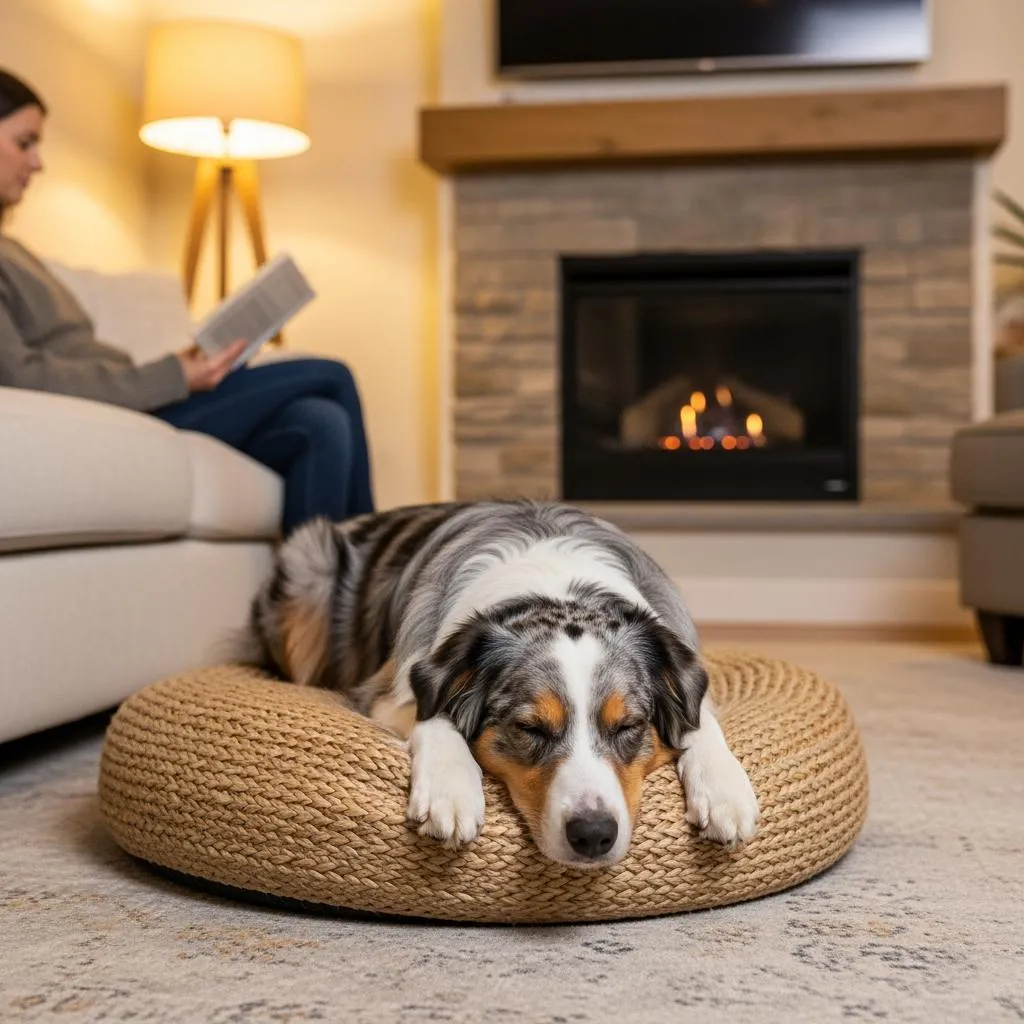
We've all been there. You're finally settling in for a quiet evening – maybe it's movie night, or perhaps you're curled up with a good book while winter winds howl outside. But your dog has other plans. The pacing begins. Then comes the whining. Maybe a toy gets dropped repeatedly in your lap. Before long, your peaceful evening has turned into a chorus of "settle down" commands that seem to fall on deaf ears.
If this scenario sounds familiar, you're not alone. As the winter months stretch on and outdoor activities become limited, many dog owners discover just how challenging it can be to live with a dog who doesn't know how to relax. The good news? Calmness isn't just a personality trait some dogs are lucky enough to possess – it's a skill that can be taught, practiced, and mastered.
Why Dogs Struggle with Indoor Calmness
Before we dive into training techniques, it's important to understand why many dogs find it difficult to settle down indoors. Our domestic dogs are descendants of animals that survived by being alert, responsive, and ready for action. This evolutionary background doesn't simply disappear because we've invited them into our homes.
Many owners mistakenly believe their dog is just 'high energy' and will always be bouncing off the walls, but in reality, most dogs haven't been taught that relaxation is a behavior we value and reward.
Take Sarah's Australian Shepherd, Blue. At three years old, Blue had earned a reputation as the dog who couldn't calm down. "He was constantly in motion from the moment he woke up until he finally crashed at night," Sarah recalls. "We assumed it was just his breed, that he needed hours of exercise, and that indoor calmness wasn't in his DNA."
But after implementing the techniques we'll discuss in this article, Blue transformed into a dog who could settle calmly during family movie nights, work-from-home periods, and even when guests visited. The secret wasn't exhausting him with more physical exercise – it was teaching him that calmness is a rewarded behavior.
The Foundation: Understanding Arousal States in Dogs
Dogs, like humans, experience different states of arousal – from deeply relaxed to highly stimulated. The problem is that many dogs spend most of their waking hours in medium to high arousal states, never learning how to voluntarily downshift into calmness.
Signs your dog might be struggling with relaxation include:
Inability to settle in one spot for more than a few minutes
Constantly seeking attention or entertainment
Responding to every small sound or movement in the environment
Panting even when not hot or physically exerted
Pacing or restless behavior in the evenings
Difficulty settling down after excitement
Interestingly, we often unintentionally reinforce this restlessness. When our dog brings us a toy, we play. When they paw at us, we pet them. When they stare at us, we find something to entertain them. Without realizing it, we're teaching our dogs that being active and engaged is the only way to get their needs met.
The key to changing this dynamic is teaching an alternative behavior – calmness – and making it rewarding for your dog.
The Place Command: Your First Step to a Calmer Home
The "Place" command (sometimes called "Go to Mat" or "Settle") is one of the most valuable skills you can teach your dog. This isn't just about getting your dog to go to a specific spot – it's about teaching them to remain there in a relaxed state until released.
What "Place" Actually Means
When taught properly, "Place" means:
Go to your designated spot (bed, mat, crate, etc.)
Remain there until released, regardless of distractions
Maintain a calm emotional state while there
This isn't about punishment or confinement – it's about creating a positive association with relaxation.
Step-by-Step Training Process
Choose the right spot: Select a comfortable bed, mat, or raised platform that will become your dog's "place." This should be something portable that you can eventually move around your home.
Introduction: Begin by leading your dog to the place and rewarding them heavily for stepping onto it. Say "Place" as they step on it, then give multiple small treats while they remain there. After a few seconds, say "Free" and encourage them to step off.
Build duration gradually: Repeat the exercise, slowly increasing the time your dog stays on the place before being released. Start with 5 seconds, then 10, then 30, and so on. If your dog gets up before being released, gently guide them back and reset the clock.
Add distance: Once your dog can stay on their place for about a minute, begin taking a step away before returning to reward. Gradually increase your distance.
Add distractions: Once your dog is reliably staying on their place for several minutes while you move around, begin adding mild distractions – walking around, making gentle noises, or bouncing a ball.
Troubleshooting Common Challenges
Mike's experience with his Labrador, Cooper, highlights a common challenge. "Cooper would stay on his bed for about 30 seconds, then creep off inch by inch, testing boundaries," Mike explains. "I was getting frustrated until our trainer pointed out that I was only noticing when Cooper broke the command, not when he was doing well."
The solution was twofold: First, Mike needed to catch Cooper being good, rewarding him randomly for remaining in place. Second, he needed to be consistent about gently returning Cooper to his place whenever he got up without being released.
Other common challenges include:
Excitement on the mat: If your dog goes to their place but remains standing, panting, or alert, they haven't truly learned the calm emotional state you're looking for. Focus on rewarding moments of relaxation – when they lie down, when their breathing slows, when they rest their head down.
Duration plateaus: If your dog seems stuck at a certain duration, take a step back and practice shorter, successful repetitions before advancing again.
Context specificity: Some dogs learn "place" perfectly in the living room but don't generalize to other locations. Practice in different rooms and eventually different environments to build a strong understanding.
The Protocol for Relaxation: Building Duration and Impulse Control
While the Place command gives your dog a specific location to practice calmness, Dr. Karen Overall's Protocol for Relaxation takes this training to the next level by systematically teaching your dog to remain calm despite increasing distractions.
This protocol consists of a series of tasks organized into days, with each day building upon the skills learned previously. The full protocol is quite detailed, but here's a simplified version to get you started:
Day 1: Basic Settle
Ask your dog to lie down on their mat or bed.
Stand directly in front of them.
Feed a treat for maintaining the down position.
Take one step back, then return and reward.
Take one step to the right, return and reward.
Take one step to the left, return and reward.
Repeat 5-10 times, keeping sessions short.
Day 2-3: Adding Movement
Continue with Day 1 exercises
Add raising your arms out to the sides
Add clapping hands softly once
Add taking two steps away and back
Add a small jump in place
Days 4-5: Adding Duration
Increase the time between rewards
Add sitting in a chair near your dog
Add standing up from the chair
Add walking in a circle around your dog
The key is to progress only when your dog is successful at the current level. If they break their settle, simply reset and try again with less challenging distractions.
Jennifer, who adopted an anxious mixed-breed dog named Luna, found the Protocol for Relaxation transformative. "Luna used to alert to every sound, constantly vigilant and unable to relax," Jennifer says. "After six weeks of daily relaxation protocol practice, she can now remain on her mat calmly while I cook dinner, answer the door, or watch TV. The change in her overall demeanor is remarkable."
Beyond Commands: Creating a Calm Environment
Training specific commands is essential, but creating an environment that promotes calmness will support your training efforts. Consider these environmental factors:
Physical Setup
Create designated relaxation zones away from high-traffic areas
Use baby gates to limit access to overstimulating areas if needed
Consider using calming music or white noise to mask triggering sounds
Manage window access if your dog is reactive to outdoor sights
Routine and Predictability
Dogs thrive on routine. When they know what to expect, they're less likely to remain hypervigilant.
Feed meals at consistent times
Schedule training, play, and walks at similar times each day
Create predictable evening routines that signal it's time to wind down
Enrichment That Promotes Calmness
Not all enrichment activities are created equal. While fetch and tug can increase arousal, these activities promote calmness:
Food puzzles that reward slow, focused attention
Snuffle mats that encourage using the nose (naturally calming for dogs)
Chew time with appropriate long-lasting chews
Scent work games that use mental energy without physical excitement
Remember that mental enrichment can be more tiring than physical exercise for many dogs, and it doesn't raise their arousal level in the same way that exciting physical activities do.
Putting It All Together: A Daily Calm-Building Routine
Creating a routine that incorporates calm-building activities throughout the day will help your dog learn that calmness is a default state, not just something they do during formal training sessions.
Morning Routine
Begin the day with a calm greeting – no excited voices or immediate rushing outside
Practice 5 minutes of Place training before breakfast
Use breakfast as a training opportunity by feeding in puzzle toys or during short training sessions
Workday Strategies
If you're home during the day, practice random "settle" periods where your dog must remain on their place while you work
If your dog struggles with calmness during work calls, schedule short training sessions before important meetings
Create a consistent "work time" signal, such as a specific mat that comes out when you need focus time
Evening Wind-Down Techniques
Schedule a calming activity (like a stuffed Kong or chew) after dinner
Practice Place training during parts of your TV shows or reading time
Create a consistent bedtime routine that signals it's time to relax
The key is consistency and gradually increasing expectations. Start with short periods of calmness and build from there.
The Power of a Quiet House
Teaching your dog to be calm indoors isn't just about convenience – it's about creating a harmonious relationship. Dogs who know how to relax are typically happier, less anxious, and better equipped to handle life's stresses. They're also more welcome in various environments and situations, which means they can be more integrated into your life.
Remember that calmness is a skill that requires practice. Some days will be more successful than others, especially in the beginning. The important thing is consistency and recognizing that you're building a foundation for a lifetime of good behavior.
If your dog is struggling significantly with indoor calmness, or if your training efforts aren't yielding results, don't hesitate to seek professional help. Some dogs need more structured approaches, especially if anxiety or other behavioral issues are contributing to their restlessness.
Call me at (248) 618-3258 or email [email protected] to discuss how we can transform your busy, restless dog into a calm household companion. Our proven Canine Connection Compass methodology has helped hundreds of dogs master the art of indoor calmness, giving their families the peaceful home environment they deserve.
Remember, you don't have to resign yourself to a home of constant motion and activity. With the right approach, even the most energetic dogs can learn the valuable skill of calmness.
Happy training!
Mandy Majchrzak
Owner and Head Trainer
Clever Canine Dog Training
Metro Detroit's Family Dog Training Specialists