Stop Doorbell Drama: Train Your Dog to Stay Calm When Visitors Arrive
Is your peaceful home transformed into chaos the moment the doorbell rings? With spring's increased social activities and home projects on the horizon, now is the perfect time to address your dog's door and crate reactivity.
The scene is all too familiar: the doorbell chimes and suddenly your dog transforms from a calm companion into a barking, jumping tornado of excitement or anxiety. Add in defensive behaviors when in their crate while visitors are present, and you have a recipe for stress that can make you think twice about hosting gatherings or scheduling home services.
As a professional dog trainer working with families throughout Metro Detroit, I've seen firsthand how these behaviors can limit social lives and create unnecessary tension in otherwise happy homes. The good news? With the right approach, these behaviors can be significantly improved before your spring calendar fills up.
Understanding the Root Causes
Before we dive into solutions, it's important to understand that both door reactivity and crate-based territorial behaviors often stem from similar roots:
Territorial instincts: Dogs naturally feel responsible for protecting their home and family, and many interpret the doorbell as an alert to potential threats.
Lack of clear boundaries: Without proper training, dogs don't understand what constitutes appropriate greeting behavior.
Excitement or anxiety: Some dogs react out of pure excitement for visitors, while others experience genuine anxiety about strangers entering their space.
Reinforced behaviors: If barking at the door has ever resulted in the "intruder" leaving (like a delivery person) or gained attention from owners, the behavior has been inadvertently reinforced.
When we view these behaviors through our Canine Connection Compass framework, we can see that these issues typically reflect imbalances in boundaries and communication – two essential pillars of a harmonious human-canine relationship.
The Foundation Work - Before Any Visitors Arrive
Creating a Rock-Solid "Place" Command
The foundation of polite greetings is a reliable "place" command – a designated spot where your dog goes and stays until released. This could be a bed, mat, or crate in view of, but away from, the door.
Training steps:
Start by luring your dog to their place with a treat
Say "place" and reward them for stepping onto it
Gradually increase duration, starting with just 5 seconds
Add distance between you and the place
Practice with mild distractions before attempting doorbell scenarios
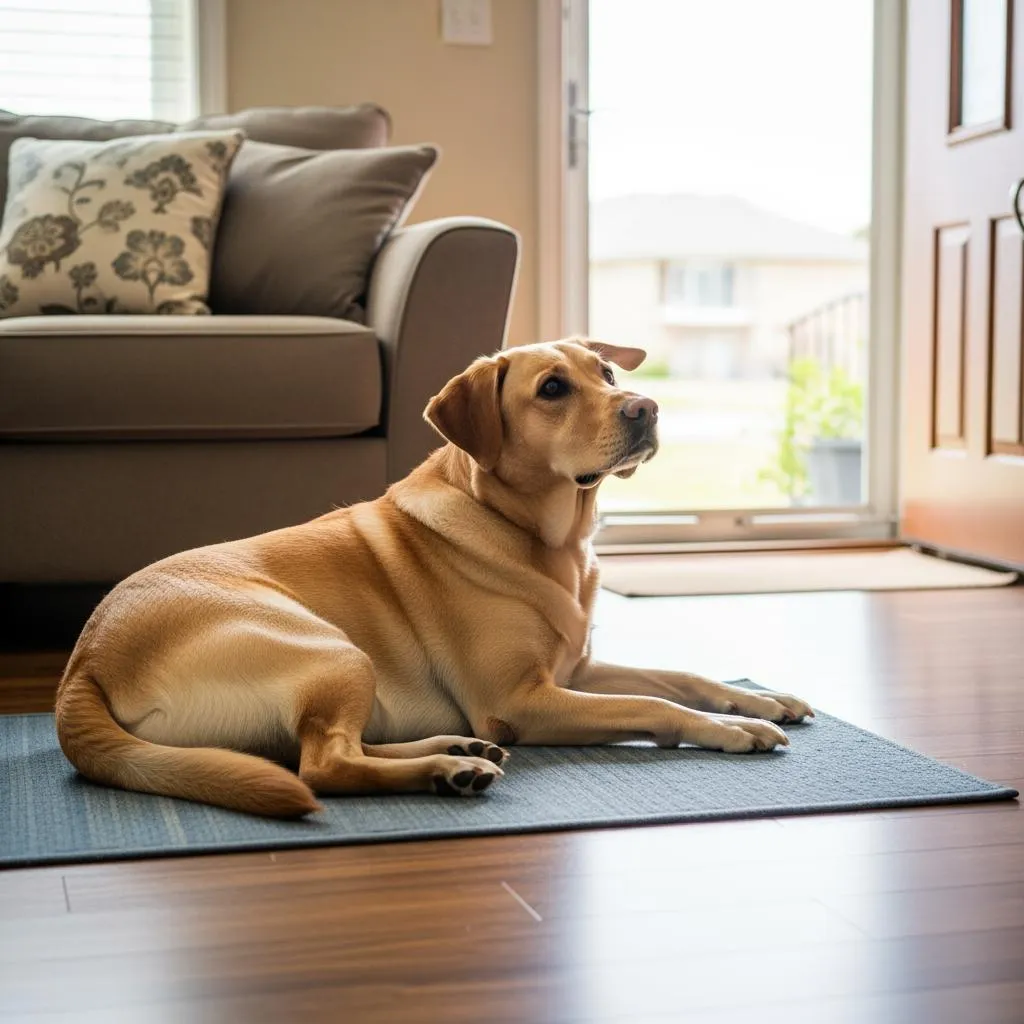
One client's Labrador, Max, went from bowling over guests to calmly watching from his bed after just three weeks of consistent place training. The key was daily 5-minute practice sessions rather than lengthy, occasional training.
Building Positive Doorbell Associations
Many dogs have learned that doorbells predict chaos. We need to rewrite this association:
Record doorbell sounds on your phone or find them online
Play at very low volume while feeding your dog treats
Gradually increase volume as your dog remains calm
Progress to having someone ring the actual doorbell while you treat
Practice having family members enter while your dog remains in place
Establishing Entry Protocols for Family Members
Consistency is crucial. Everyone in the household needs to follow the same entry routine:
Enter calmly without excessive greeting
Ignore the dog until they're settled
Reward calm behavior with attention, not excitement
Practice these entries multiple times daily
Crate Confidence Building Exercises
For dogs who show reactivity in their crate when visitors are present:
Practice crating with the door open during quiet times
Provide special high-value treats only available in the crate
Gradually introduce movement and activity around the crate
Have family members approach the crate calmly, drop treats, and walk away
Progress to having family sit near the crate for increasing durations
The Spring Visitor Preparation Plan
With foundations established, here's your three-week plan to prepare for spring's social calendar:
Week 1: Controlled Practice
Monday-Wednesday:
5-minute place training sessions, 3 times daily
Doorbell recordings during meals
Crate exercises with family members
Thursday-Friday:
Add doorbell to place training (ring bell, send to place, reward)
Practice entries with family members
Begin longer crate sessions with activity nearby
Weekend:
Invite one calm friend for a practice visit
Brief your friend on the entry protocol
Keep the visit short (15 minutes) and positive
Week 2: Building Duration and Distraction
Monday-Wednesday:
Practice place stays with doorbell, increasing duration to 5 minutes
Have family practice approaching crate with more animation
Add walking past the door while dog maintains place
Thursday-Friday:
Simulate package deliveries (go outside, ring bell, enter with a box)
Practice place command from different rooms
Add mild distractions during crate time
Weekend:
Invite 2-3 calm friends for a slightly longer visit
Prepare frozen Kongs for crate time during part of the visit
Practice transitions between crate and place
Week 3: Real-World Application
Monday-Wednesday:
Role-play contractor visits (enter with tools, move around the home)
Practice having visitors approach the crate calmly
Increase environmental challenges during place stays
Thursday-Friday:
Final refinement of all skills
Practice the complete visitor protocol with family
Ensure all management tools are ready (baby gates, leashes, etc.)
Weekend:
Host a small gathering as the final test
Be prepared to manage your dog with leash or crate as needed
Celebrate improvements, no matter how small
Day-of-Visit Management Strategies
Even with great preparation, you'll need day-of strategies for success:
Pre-visitor Exercise Requirements
A tired dog is a better-behaved dog. Before visitors arrive:
Provide at least 30 minutes of physical exercise
Add 15 minutes of mental stimulation (training, puzzle toys)
Allow time for a bathroom break
Give your dog some quiet time to settle
Entry Management Protocols
When visitors arrive:
Place your dog in position (place or crate) before opening the door
Greet guests calmly and bring them in
Instruct guests to ignore your dog initially
Release your dog from place only when calm (if using place)
Keep initial greetings brief and controlled
Guest Instruction Guidelines
Brief your guests ahead of time:
Enter without high-pitched greetings
Avoid direct eye contact with an excited dog
Wait for your signal before interacting with your dog
Reward calm behavior with calm attention
Recovery Periods Between Visitors
If hosting multiple guests arriving at different times:
Return your dog to place or crate between arrivals
Provide a chewy or Kong during breaks
Consider a short outdoor break if multiple arrivals are expected
Watch for stress signals and provide quiet time if needed
Troubleshooting Common Scenarios
When Multiple Guests Arrive Simultaneously
This challenging scenario requires extra preparation:
Station your dog further from the door
Consider having someone stay with your dog while others greet guests
Use a leash for additional control if needed
Be ready to return to basics if your dog becomes overwhelmed
When Children Visitors Excite Your Dog
Children's high energy can trigger excitement:
Meet child visitors outside first if possible
Have children sit down immediately upon entering
Provide children with treats to reward calm behavior
Consider a baby gate to create space initially
When Contractors Need Extended Access
For longer-term visitors like contractors:
Create a safe zone for your dog away from work areas
Introduce contractors briefly using your greeting protocol
Consider crating in a quiet room during the most disruptive work
Provide plenty of enrichment during confinement
When Delivery Drivers Trigger Reactions
For brief visits that often cause big reactions:
Use window coverings to reduce visual triggers
Create a delivery drop spot away from the main door
Practice "look at me" or "place" when delivery vehicles approach
Consider a "thank you" place where your dog goes when you retrieve packages
From Chaos to Calm: A Real Success Story
When I first met Amy and her German Shepherd mix in Rochester Hills, they were at their wits' end. Their dog Bella would bark uncontrollably whenever someone approached the house and became even more defensive when crated during visits. With a home renovation planned and family visits increasing in spring, they needed help fast.
We implemented the exact plan outlined above, with particular focus on the place command and positive doorbell associations. The turning point came during week two when Bella began automatically moving to her place mat at the sound of the doorbell rather than rushing the door.
By the time their renovation began, Bella could remain calm in her crate while contractors moved through the home. For family gatherings, she now greets visitors politely after an initial settling period on her place mat.
"We can finally enjoy having people over without the stress and embarrassment," Amy told me. "The contractors even commented on how well-behaved she is compared to other homes they work in."
Your Path Forward
Remember that changing these deeply ingrained behaviors takes consistency and patience. Most families see significant improvement within 3-4 weeks of dedicated training, but some dogs may need longer depending on how established the reactive behaviors are.
The key is starting now, before your spring calendar fills up, so you and your dog can enjoy a more peaceful home during the busy social season ahead.
Call me at (248) 618-3258 or email [email protected] to discuss how we can transform your dog's door and crate behavior. Our proven Canine Connection Compass methodology has helped hundreds of Metro Detroit dogs overcome reactivity and develop polite greeting skills.
You don't have to dread the sound of your doorbell or apologize for your dog's behavior. With the right guidance, both you and your dog can enjoy a more relaxed spring season with visitors.
Happy training!
Mandy Majchrzak
Owner and Head Trainer
Clever Canine Dog Training
Metro Detroit's Family Dog Training Specialists