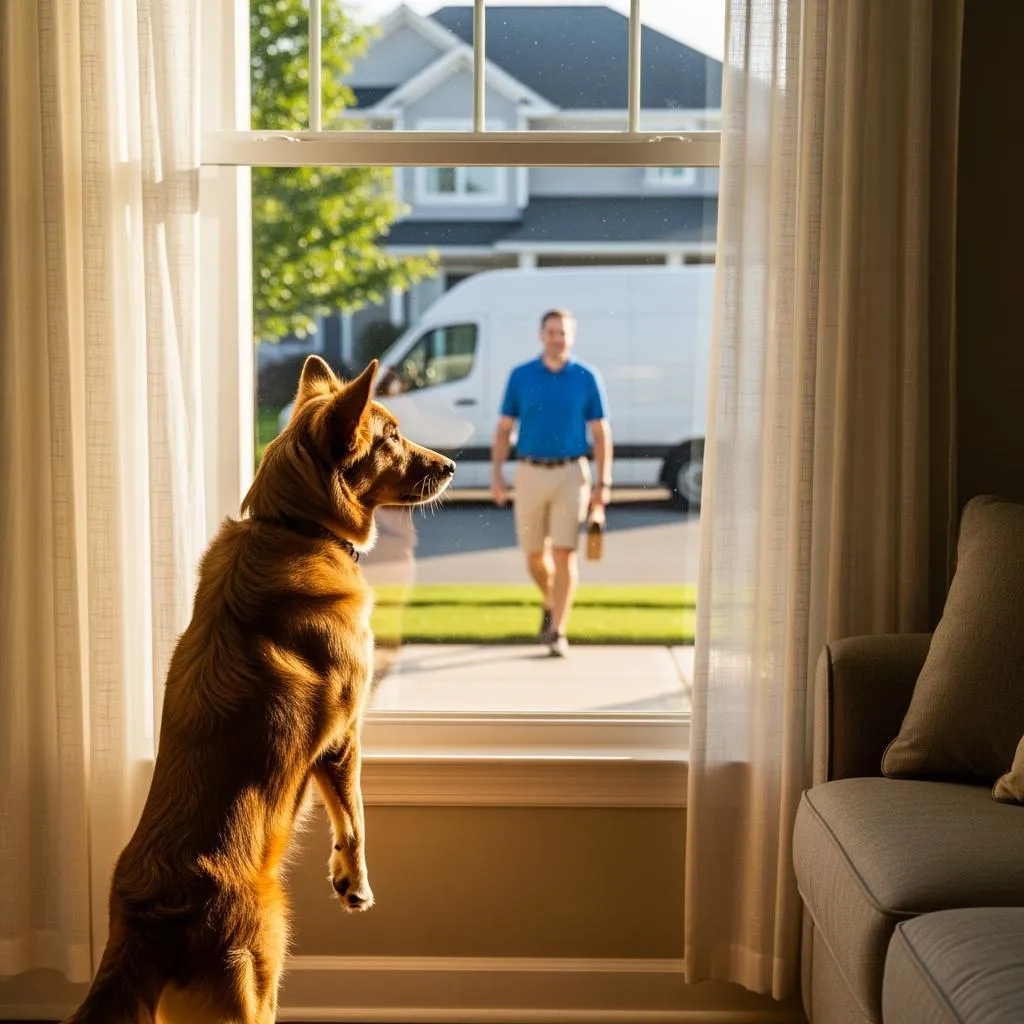
Stop Delivery Driver Chaos: Train Your Reactive Dog Fast

It's 6:47 PM on a Tuesday. You've got three kids doing homework at the kitchen table, dinner's almost ready, and your partner just texted they're picking up the online grocery order on the way home. Then the Ring doorbell chimes.
Your dog absolutely loses it.
Barking, lunging at the door, jumping on the kids, knocking over a backpack. Your oldest yells at the dog. Your youngest starts crying. The DoorDash driver is already back in their car. And you're standing there thinking: this happened yesterday. And the day before. And it'll happen again tomorrow when Amazon shows up.
If this sounds like your house, you're not alone. I work with families dealing with this exact scenario almost weekly, and it's gotten so much more intense since 2020. Between grocery deliveries, takeout, Amazon Prime, and everything else showing up at our doors, some dogs are triggered 5-8 times a day. That's not a training problem—that's a lifestyle crisis.
Let's talk about what's actually happening and how to survive it without losing your mind.
Why Delivery Reactivity Is Different From Regular Door Reactivity
Most traditional door manners training assumes someone rings the doorbell, you answer it, maybe it's a friend or a repair person. Done.
But delivery reactivity is a completely different beast:
Frequency: t happens multiple times per day, not once in a while
Speed: The person is gone in 30 seconds—your dog never gets closure
Unpredictability: Different times, different people, different vehicles
Electronic triggers: Ring chimes, phone notifications, vehicle sounds
Family chaos: Everyone reacts differently, creating inconsistent responses
Your dog isn't being stubborn. They're being triggered over and over, all day long, with no resolution. Their nervous system never gets a break.
The Ring Doorbell Problem Nobody Talks About
Here's something I see constantly: families install a Ring doorbell thinking it'll help them manage deliveries better. And it does—for humans. But for dogs? It often makes things worse.
Now your dog has two triggers: the actual doorbell sound AND the Ring chime on your phone. Some dogs even start reacting to the phone notification sound when it happens for anything else. I had a client in Commerce Township whose dog started barking every time her teenager got a text because the sounds were similar enough.
Plus, Ring doorbells often catch motion earlier than a traditional doorbell—your dog might start reacting when the delivery driver is still walking up the driveway, giving them even more time to escalate before the actual delivery happens.
I'm not saying get rid of your Ring. But we need to account for it in our management plan.
What's Happening in Your Dog's Brain
Let's get real about what reactivity actually is. Your dog isn't trying to ruin dinner. They're having a genuine stress response.
Every time that doorbell rings:
Their brain floods with adrenaline and cortisol
Their body goes into fight-or-flight mode
They're scanning for threats and trying to "protect" the house
All their training goes out the window because they're in survival mode
And here's the kicker: when it happens 5-8 times a day, their stress hormones never fully settle. They're living in a constant state of vigilance, waiting for the next trigger. That's why your dog might seem more reactive overall lately—they're not relaxing between deliveries anymore.
The Chen Family Reality Check
Let me tell you about the Chen family from Rochester Hills. Mom works from home three days a week. Dad's a teacher. Two kids, ages 8 and 12. And Cooper, their 4-year-old rescue mix who completely melts down at every delivery.
When they called me, Sarah (mom) was at her breaking point. She had back-to-back Zoom meetings and couldn't mute fast enough when deliveries arrived. Cooper's barking was echoing through every client call. The kids had stopped inviting friends over because Cooper's behavior was embarrassing. And Mike (dad) was frustrated because he'd try to grab Cooper's collar during episodes, which only made Cooper more frantic.
They'd tried everything: yelling "no," putting Cooper in a crate (he barked louder), even buying those ultrasonic devices from Amazon (spoiler: they don't work).
Here's what we did instead.
Management First: Make It Survivable Today
Before we can train new behaviors, we need to stop the rehearsal of the old ones. Every time Cooper (or your dog) practices the freak-out routine, it gets more ingrained.
Here's your immediate survival plan:
1. Create a Delivery Safe Zone
Pick a room far from the front door—bonus if it has a white noise machine or TV you can turn on. When you're expecting a delivery (or during peak delivery hours), your dog hangs out there with something really engaging: a frozen Kong, a sniff mat, a long-lasting chew.
This isn't punishment. It's preventing them from practicing the reactive behavior while also giving them something positive to do instead.
2. Silence All the Bells
Temporarily turn off your Ring chime. Turn off your actual doorbell if you can. Put a note on your door for delivery drivers: "Baby sleeping—please don't knock or ring."
I know this feels extreme, but you need a reset. Once we've built new patterns, we can gradually add triggers back.
3. Get Everyone on the Same Page
This is huge for busy families. Sit down—everyone—and agree on the protocol:
Who's responsible for managing the dog during deliveries?
What's the backup plan if that person isn't home?
What should the kids do? (Hint: not yell at the dog or try to "help")
How do you communicate when a delivery is expected?
For the Chens, they created a family text thread just for deliveries. "Package coming in 10 min" gave everyone time to prepare.
4. Scheduled Delivery Windows
Where possible, batch your deliveries. Use Amazon's day-of-week delivery option. Schedule grocery delivery for the same window. The more predictable it is, the easier it is to manage.
Building New Patterns: The Training Side
Once you've got management in place and your dog isn't practicing the explosive behavior multiple times daily, we can start building new responses. This is where the Canine Connection Compass™ approach really shines—we're not just drilling obedience, we're teaching your dog a completely different emotional response to the trigger.
Doorbell Desensitization (The Right Way)
This is NOT about making your dog "sit-stay" while someone's at the door. That's too hard, too fast.
Start here:
Play your doorbell sound at barely-audible volume while your dog is doing something enjoyable (eating dinner, getting pets)
If they notice it but don't react, mark it with a treat
Gradually increase the volume over days and weeks—not minutes
Practice at random times, not just when actual deliveries happen
The goal is for your dog to hear the doorbell and think "oh, that sound means treats" instead of "INTRUDER ALERT."
The "Go to Your Spot" Cue
Teach your dog that when the doorbell rings, the correct response is to go to a specific mat or bed away from the door. This gives them a job—something incompatible with lunging at the door.
Practice this a hundred times with fake doorbells before you ever try it with a real delivery.
Real Delivery Practice
Eventually, you'll need to practice with actual people at the door. Recruit a friend or neighbor. Have them "deliver" something boring (an empty box) multiple times in one session. Pay your dog heavily for any calm behavior.
Start with your dog on a leash, far from the door. Your helper knocks/rings, immediately leaves, and your dog gets treats for not reacting. Repeat until your dog is completely bored by the whole thing.
When You Need Professional Help
Look, I'm giving you the framework here, but some dogs need more support. If your dog is:
Redirecting aggression toward family members during episodes
Breaking through barriers or injuring themselves trying to get to the door
Not settling between deliveries—constantly anxious and vigilant
Not responding to management strategies after 2-3 weeks
...then we're likely dealing with a more intense reactivity issue that needs professional eyes on it.
The good news? This is incredibly fixable. I've worked with families throughout Metro Detroit managing this exact issue, and the transformation is usually dramatic once we've got the right plan in place.
The Long Game
Here's what I want you to remember: this didn't develop overnight, and it won't resolve overnight.
The Chen family? It took about six weeks before Sarah could take Zoom calls without panic when the Ring notification popped up. It took three months before Cooper would reliably go to his mat when the doorbell rang. But now? Deliveries are a non-event. Cooper hangs out on his bed, gets his treat, and goes back to napping.
Your family can get there too. It takes consistency, patience, and a plan that actually accounts for real life—multiple deliveries, busy schedules, kids, work-from-home chaos, all of it.
If you're reading this and thinking "I need help NOW," I get it. Managing a reactive dog in a high-delivery household is exhausting. Give us a call at(248) 618-3258 or email [email protected]. We offer free 15-minute discovery calls where we can talk through your specific situation and figure out if we're the right fit to help your family.
You don't have to live like this. Your dog doesn't have to live like this. Let's figure it out together.
Happy training,
Mandy Majchrzak
Founder, Clever Canine Dog Training
Metro Detroit's Family Dog Training Specialist
