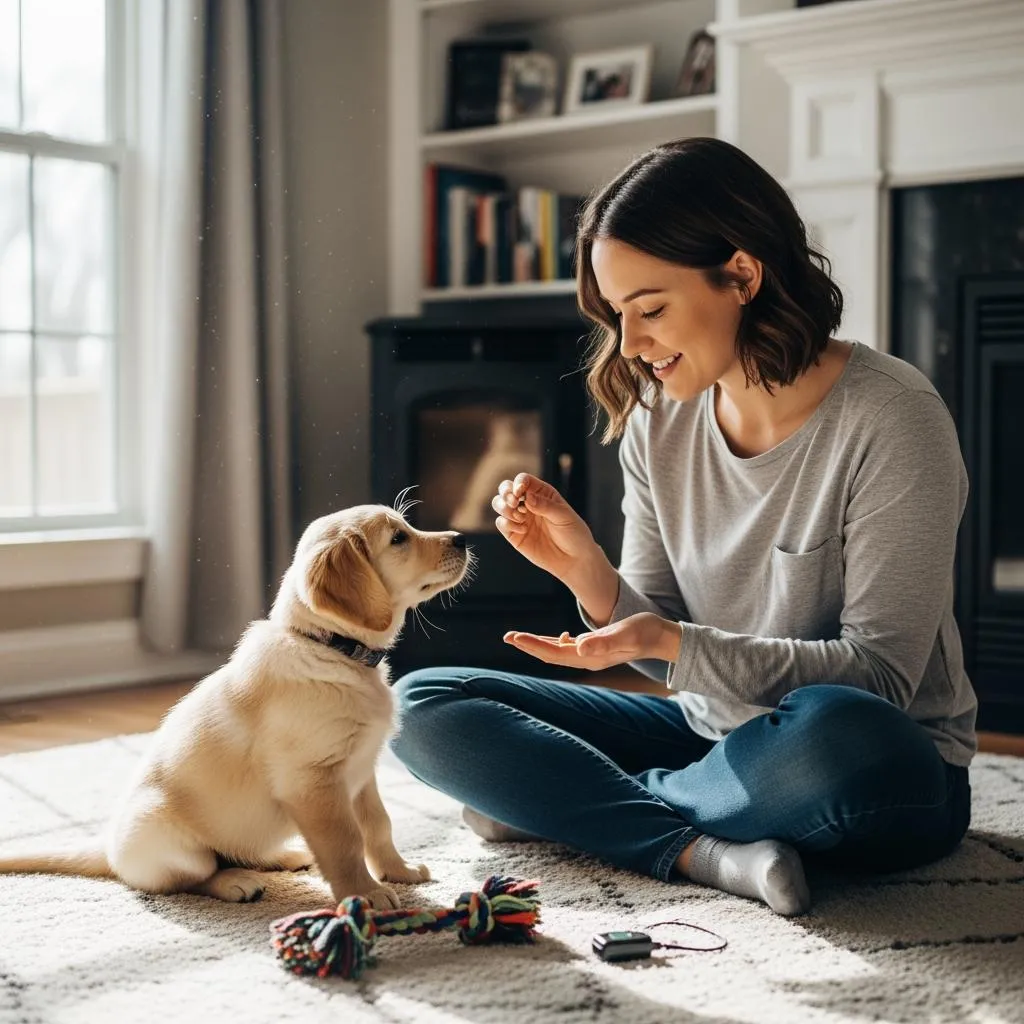
Puppy Love: Essential Training Foundations for Your New Addition
There's nothing quite like bringing home a new puppy – those soulful eyes, the adorable clumsiness, and that unmistakable puppy breath. But as many new puppy parents quickly discover, behind that irresistible cuteness lies a whirlwind of energy that can turn your home (and life) upside down seemingly overnight. One day you're melting over puppy cuddles, and the next you're wondering why your furry bundle of joy thinks 3 AM is the perfect time for a play session or why your favorite shoes have become their favorite chew toy.
If you're feeling overwhelmed by your new addition, you're not alone. Many of our Metro Detroit clients experience what trainers affectionately call the "puppy blues" – that moment when the reality of puppy parenthood hits and you wonder what you've gotten yourself into. The good news? With the right foundations, this challenging phase is temporary, and the loving bond you'll build will last a lifetime.
As we approach Valentine's Day, let's talk about creating true puppy love – the kind that goes beyond the honeymoon phase and builds a foundation for years of companionship. These essential training foundations will help you not only survive puppyhood but truly enjoy this special time with your new family member.
The First Week: Surviving Puppy Parenthood with Sanity Intact
Creating a Puppy-Proof Haven
Before bringing your puppy home, see your living space through the eyes of a curious, teething explorer with no concept of what's valuable or dangerous. Secure electrical cords, remove toxic plants, and put away anything you don't want chewed. Remember, to a puppy, your entire home is one giant chew toy until taught otherwise.
Set up designated puppy zones with baby gates or exercise pens where your puppy can safely exist when you can't provide direct supervision. This isn't restrictive – it's protective, giving your puppy appropriate freedom while preserving your sanity and their safety.
Establishing a Consistent Routine (Your Puppy's Roadmap to Success)
Puppies thrive on predictability. Creating a consistent daily schedule for feeding, potty breaks, play sessions, training, and sleep will help your puppy feel secure and develop healthy habits.
Sample Puppy Schedule:
6:00 AM: Morning potty break
6:15 AM: Breakfast
6:30 AM: Potty break
7:00-8:00 AM: Supervised play/training
8:00-10:00 AM: Nap time in crate
10:00 AM: Potty break
10:15-11:00 AM: Gentle socialization/play
11:00 AM-1:00 PM: Nap time
(Continue pattern throughout day)
Last meal: 6:00 PM (removing water 2 hours before bedtime)
Bedtime routine starting 9:00 PM
Sarah from Rochester Hills thought she'd never establish a routine with her energetic Goldendoodle puppy. "The first three days were complete chaos," she told us. "But once we implemented a strict schedule, it was like magic. Bella started to anticipate what came next, and both of us were so much calmer."
Sleep Solutions: Getting Through Those First Nights
Those first few nights can test even the most patient puppy parent. Your puppy is experiencing their first time away from their mother and littermates, in a strange environment with unfamiliar people. Whining, crying, and howling are normal expressions of this anxiety.
Survival strategies for nighttime:
Place the crate in your bedroom so your puppy can sense your presence
Use a heartbeat toy or warming pad designed for puppies
Provide a shirt with your scent
Set alarms for middle-of-the-night potty breaks rather than waiting for crying
Keep nighttime interactions boring and business-like
Consider using a white noise machine to mask unfamiliar sounds
Remember that your puppy's bladder is tiny and their control is limited. Most puppies need at least one nighttime potty break until 12-16 weeks of age. This phase passes quickly, though it may not feel like it at 3 AM!
Building Your Love Connection: The Foundation of All Training
Speaking Your Puppy's Language: Communication Basics
Effective training starts with understanding how dogs communicate and learn. Dogs aren't born understanding English – they learn to associate certain sounds (our words) with specific actions or outcomes through consistent repetition.
Start by teaching your puppy their name as a cue for attention. Say their name in a happy tone, and when they look at you, immediately mark that moment with a "yes!" and a treat. Practice this dozens of times daily in different locations and scenarios.
Similarly, choose your core cues consistently. If "come" is your recall word, everyone in the family should use that exact word, not "come here," "come on," or "get over here." Consistency creates clarity for your puppy.
Trust-Building Exercises That Create Lasting Bonds
Trust forms the foundation of your relationship with your puppy. Every positive interaction deposits into your "trust bank," while negative experiences make withdrawals. Focus on building a substantial trust reserve through these simple exercises:
Hand feeding: Rather than placing food in a bowl, use mealtime as bonding time. Hand feed portions of your puppy's meals, helping them associate your hands with good things (not just grabbing and restraining).
Gentle handling: Daily, spend time gently touching your puppy's paws, ears, mouth, and body while pairing this handling with treats. This creates positive associations with being touched and prepares them for veterinary care, grooming, and nail trims.
Predictable interactions: Be consistent in how you pick up, put down, and interact with your puppy. Avoid startling them or approaching from behind unexpectedly.
When Mike brought home his Lab puppy, he didn't realize how important these trust exercises would be. "Tucker was afraid of having his paws touched, which made nail trims impossible," he explained. "After two weeks of daily paw handling paired with high-value treats, he now offers his paw voluntarily."
The Power of Positive Associations (Making Everything Good)
Your puppy's early experiences shape their lifelong perception of the world. During this critical developmental period, focus on creating positive associations with everything you want your puppy to accept throughout their life.
Introduce new experiences gradually, pairing them with something your puppy already loves. This might mean offering treats during car rides, playing games near the vacuum (while it's off, then on low, then normal), or inviting calm visitors to toss treats to your puppy.
Remember that forcing a frightened puppy to "just deal with it" doesn't build courage – it breaks trust. Always progress at your puppy's pace, ensuring they remain comfortable and confident.
Essential Training Foundations Every Puppy Needs
House Training Without Headaches
House training success depends on prevention, supervision, and positive reinforcement – not punishment. Puppies physically cannot hold their bladders for long periods until they mature, so set realistic expectations based on age.
House training essentials:
Take your puppy out after every meal, nap, play session, and at least hourly when awake
Use a consistent potty spot and cue word ("go potty")
Throw a puppy party with treats and praise immediately after they eliminate outside
Supervise constantly indoors or confine to a puppy-proof area
Clean accidents thoroughly with an enzymatic cleaner
If you catch an accident in progress, calmly interrupt and take outside
Never punish accidents – this teaches puppies to hide from you to eliminate
For Metro Detroit puppy owners facing winter house training challenges, consider creating a small, sheltered potty area close to your door, or using potty pads as a temporary measure during extreme weather.
Crate Training: Creating Your Puppy's Safe Space
When introduced properly, a crate becomes your puppy's den – a safe, comfortable retreat they seek voluntarily. The key is making the crate a wonderful place, never used for punishment.
Crate training steps:
Introduce the crate with door open, tossing treats inside for puppy to discover
Feed meals in the crate with door open
Begin closing door briefly during meals, opening before puppy finishes
Practice brief closed-door sessions with a stuffed Kong or chew
Gradually extend duration, always setting your puppy up for success
Create positive crate routines for naps and overnight
After struggling for weeks, the Anderson family discovered the power of making the crate a positive space. "We were doing everything wrong," Jennifer admitted. "We were using the crate as punishment and wondering why Baxter hated it. Once we reintroduced it with treats, toys, and positive associations, he started going in voluntarily within just a few days."
Gentle Handling: Preparing for a Lifetime of Care
Your puppy needs to become comfortable with all types of handling they'll experience throughout life – from routine grooming to veterinary care. Start these exercises early, pairing handling with treats:
Gently hold and examine each paw, pressing slightly to extend nails
Look in ears, followed by treats
Lift lips to see teeth, followed by treats
Brush with soft brush for brief periods, treating throughout
Practice brief restraint, releasing before puppy becomes uncomfortable
Gradually increase duration and intensity of handling as your puppy becomes comfortable. These exercises prevent future struggles with necessary care procedures.
Name Recognition & Attention Games
Your puppy's name should mean "look at me" – not "uh oh, I'm in trouble." Build a strong positive response to their name with these games:
Name game: Say puppy's name once. When they look at you, mark with "yes!" and treat. Repeat in different locations with increasing distractions.
Ping-pong recall: Have family members take turns calling puppy's name from different locations, rewarding handsomely when they respond.
Eye contact game: Remain silent and wait for your puppy to look at you. The moment they make eye contact, mark with "yes!" and treat. This builds the habit of checking in with you.
Socialization: Your 16-Week Window of Opportunity
The Science Behind Puppy Socialization
The period between 8-16 weeks represents a critical socialization window when puppies are primed to accept new experiences. During this time, their brains are specially equipped to form positive associations that last a lifetime. Once this window closes, the process becomes much more difficult.
Research shows that puppies who receive proper socialization during this period are significantly less likely to develop fear, aggression, or anxiety later in life. This doesn't mean exposing your puppy to overwhelming situations – quality matters more than quantity.
Your Complete Socialization Checklist
Aim to expose your puppy to these experiences before 16 weeks, always ensuring positive, non-frightening interactions:
People:
Children of different ages
People wearing hats, sunglasses, uniforms
People of different ethnicities
People using mobility aids (wheelchairs, canes)
People with beards, bald heads, unusual gaits
Animals:
Other puppies (in controlled, clean environments)
Adult dogs (known to be puppy-friendly and vaccinated)
Other animals they'll encounter in your life
Environments:
Different flooring surfaces
Stairs, elevators
Car rides
Veterinary office (just for treats, not procedures)
Urban environments with traffic
Rural/natural environments
Sounds:
Household appliances
Traffic noise
Thunder recordings (at low volume)
Children playing
Construction sounds
Creative Indoor Socialization Ideas for Winter
Winter weather in Michigan can make socialization challenging, but creativity helps:
Invite friends to your home (one new person per day is better than ten at once)
Visit pet-friendly indoor locations
Create sound libraries (YouTube has excellent puppy socialization sounds)
Set up texture stations with different flooring samples
Practice with objects like umbrellas, rolling suitcases, or bicycles in your home
Some Metro Detroit indoor locations that welcome puppies include select hardware stores, pet supply stores, and some shopping centers – just be sure to carry your puppy in public until their vaccination series is complete.
Avoiding Socialization Pitfalls
Common mistakes to avoid:
Overwhelming your puppy with too much at once
Forcing interactions when puppy shows fear
Allowing uncontrolled interactions with unknown dogs
Exposing to other dogs before vaccination protection
Mistaking tolerance for enjoyment
Remember that socialization means creating positive experiences – not just exposure. Always watch your puppy's body language and be ready to create distance or end the interaction if they show signs of stress.
Preventing Common Puppy Problems Before They Start
Redirecting Puppy Biting (Saving Your Hands and Furniture)
Puppy biting is normal developmental behavior, but that doesn't mean you have to endure it. The goal isn't to stop biting entirely (an impossible task for a teething puppy) but to redirect it to appropriate items.
Effective strategies:
Keep appropriate chew toys available in every room
When puppy bites, calmly redirect to a toy
If redirection fails, say "ouch" in a calm voice and briefly stop play
Provide frozen washcloths or puppy-safe frozen toys for teething relief
Ensure adequate exercise and mental stimulation
Schedule regular nap times (overtired puppies bite more)
Emma was at her wit's end with her Border Collie puppy's biting until she implemented a comprehensive approach. "I was covered in scratches and bruises," she recalled. "Once I realized Pepper needed more mental exercise and consistent nap times, the biting reduced dramatically. The frozen Kong toys were lifesavers during teething."
Managing Puppy Energy (Before It Manages You)
Puppies have boundless energy but limited self-control. Rather than expecting your puppy to be calm without help, create an environment and routine that sets them up for success.
Energy management essentials:
Provide age-appropriate exercise (avoid repetitive high-impact activities)
Implement mental stimulation through training, food puzzles, and scent games
Enforce regular nap times (most puppies need 18-20 hours of sleep daily)
Create a "settle mat" where your puppy learns to relax
Practice capturing calmness – rewarding your puppy when they choose to be calm
Remember that an overtired puppy often becomes more energetic and bitey, not less. Sometimes the solution to wild "zoomies" behavior is a nap, not more exercise.
Setting Boundaries with Love
Boundaries aren't restrictive – they're liberating for both you and your puppy. Clear, consistent boundaries create security and predictability, helping your puppy understand your expectations.
Boundary basics:
Decide family rules before problems develop (furniture access, jumping, etc.)
Ensure all family members enforce the same rules
Use management (gates, leashes, crates) to prevent unwanted behaviors
Teach and reward alternative behaviors rather than just saying "no"
Remain calm and matter-of-fact when enforcing boundaries
When to Seek Professional Help
While puppyhood challenges are normal, sometimes professional guidance makes the journey smoother. Consider working with a professional trainer if:
You're feeling overwhelmed or frustrated with your puppy
Your puppy shows signs of fear, anxiety, or concerning aggression
House training isn't progressing after consistent effort
You have specific goals like therapy work or dog sports
You want to prevent problems before they develop
This is your first puppy and you'd like guidance
Professional trainers don't just fix problems – they help prevent them by establishing solid foundations. Many of our clients wish they'd started working with us earlier rather than waiting for problems to develop.
Our Canine Connection Compass approach focuses on building the relationship between you and your puppy while creating clear communication, appropriate boundaries, and impulse control – the perfect foundation for a lifetime of harmony.
Building a Lifetime of Love
The early weeks with your new puppy may feel overwhelming, but remember – you're building something beautiful. Each training session, each consistent routine, each positive experience is a building block in a relationship that will bring you joy for years to come.
The puppy phase passes quickly, though it rarely feels that way when you're in it! The investment you make now in proper socialization, positive training, and loving boundaries will return dividends in the form of a confident, well-adjusted adult dog who's a joy to live with.
This Valentine's Day, as you think about love, remember that the greatest gift you can give your puppy is the time and patience to help them become their best selves. The love and trust you build today becomes the foundation of your journey together.
Call me at (248) 618-3258 or email [email protected] to discuss how we can help you build the perfect foundation with your new puppy. Our proven Canine Connection Compass methodology has helped hundreds of Metro Detroit dogs develop into well-mannered family companions who bring joy rather than stress to their homes.
Remember, you don't have to navigate puppyhood alone – we're here to guide you through every adorable, challenging, wonderful step of the journey.
Happy training!
Mandy Majchrzak
Owner and Head Trainer
Clever Canine Dog Training
Metro Detroit's Family Dog Training Specialists