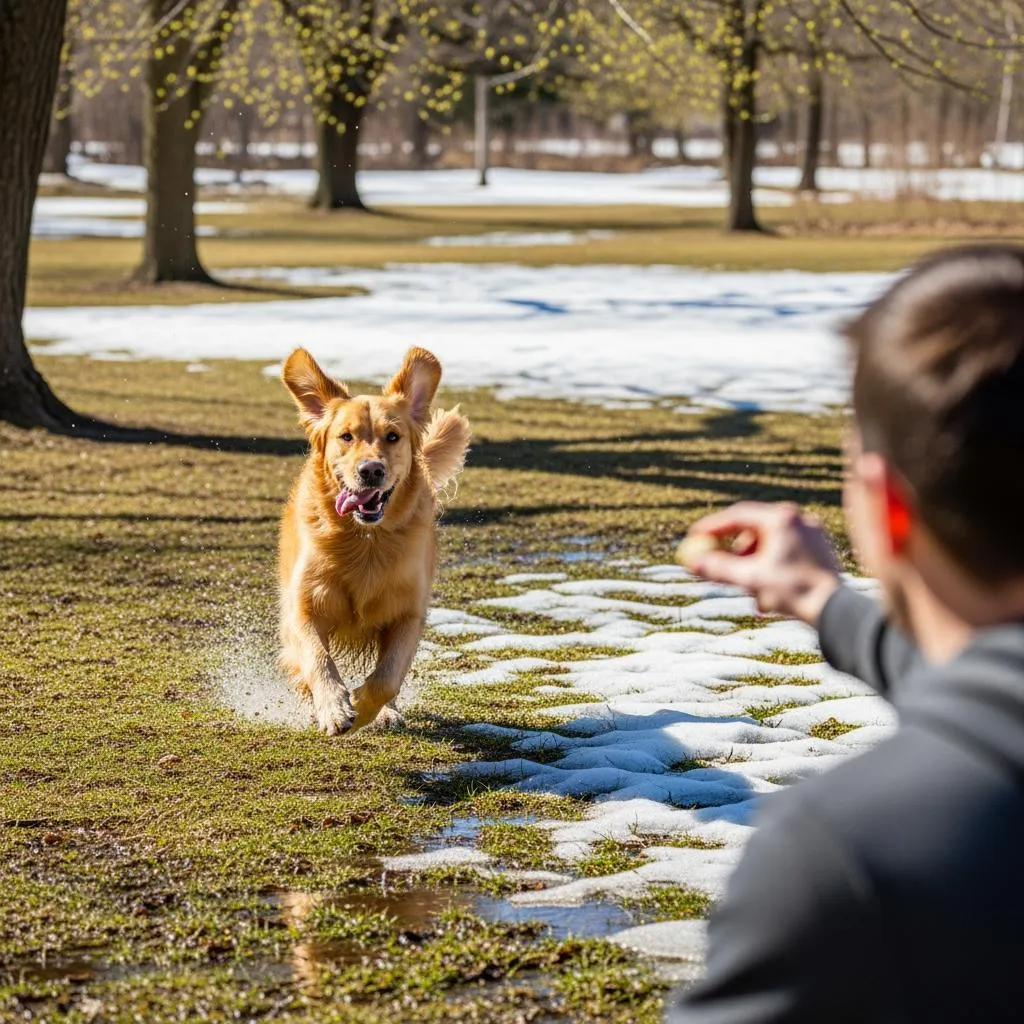
March Mudness: Master Dog Recall Training During Spring's Challenging Season
It happens every year. The snow melts, revealing patches of mud and forgotten treasures from last fall. Your dog, who has been relatively calm all winter, suddenly transforms into an over-excited explorer with selective hearing. That rock-solid recall command you worked so hard on? It seems to have melted away with the snow. If your dog is suddenly pretending they don't know their name when called at the park, you're experiencing one of spring's most common training challenges.
Spring brings a dramatic shift in our dogs' environments. After months of limited outdoor time and muted winter scents, the world suddenly explodes with stimulating smells, sounds, and sights. This sensory overload can overwhelm even the best-trained dogs, making March and April particularly challenging months for maintaining training consistency.
Let's explore how to navigate this seasonal transition while keeping your training intact and your sanity (and floors) clean.
Understanding Spring's Impact on Dog Behavior
The seasonal shift affects our dogs in ways many owners don't anticipate. Dogs experience spring fever just like we do, but their version comes with some unique challenges:
Heightened Sensory Stimulation: As the ground thaws, previously frozen scents become available again. This creates an overwhelming olfactory experience that can make your dog suddenly ignore commands they've previously mastered.
Increased Energy Levels: Many dogs naturally become more energetic as daylight hours increase. This biological response to changing light patterns can make your normally calm companion suddenly bounce off the walls.
Wildlife Activity: Spring brings increased wildlife activity as animals emerge from hibernation or migration. Squirrels, rabbits, and birds become more visible, triggering prey drive in many dogs.
Pent-Up Energy Release: After a winter of limited exercise due to weather constraints, dogs often have accumulated energy they're eager to release.
Lisa, one of our clients, described it perfectly: "My Goldendoodle Max was an angel all winter. Then March hit, and suddenly he was pulling on leash, ignoring his recall, and acting like he'd never had a day of training in his life!"
This behavior isn't rebellion or regression—it's a natural response to environmental changes. Understanding this helps us approach spring training challenges with empathy rather than frustration.
Preparation & Prevention: Setting Up for Spring Success
The best approach to spring training challenges is proactive preparation. Here's how to set yourself and your dog up for success:
1. Establish a Mud Management System
Create a simple "mudroom" station near your door with:
A dedicated towel for paw wiping
A shallow basin for quick paw dips
A mat that traps dirt and moisture
Teaching a "wait" command at the door allows you to clean paws before your dog tracks mud throughout your home. Practice this routine before you actually need it, rewarding your dog for patience during the cleaning process.
2. Gradually Increase Exercise
Rather than immediately jumping to long spring walks, gradually increase exercise to prevent over-exhaustion and the poor decision-making that comes with it. A tired dog isn't necessarily a well-behaved dog—an overstimulated, exhausted dog often makes worse training choices.
3. Refresh Basic Commands Indoors First
Before testing your dog's abilities in distracting environments, refresh basic commands in your controlled indoor space. Spend 5-10 minutes daily practicing sit, stay, and especially recall in your living room before expecting compliance at the park.
4. Prepare Higher-Value Rewards
What motivated your dog in the quiet winter months might not compete with spring distractions. Upgrade your training treats to something exceptionally enticing—like small pieces of chicken, cheese, or freeze-dried liver—to make paying attention to you more rewarding than investigating that fascinating new spring smell.
Refreshing Reliable Recall: Your Spring Training Priority
Of all commands affected by spring's distractions, recall typically suffers most. Here's how to rebuild and strengthen this crucial skill:
1. The Recall Refresh Protocol
Start in low-distraction environments and gradually increase challenge levels:
Level 1: Indoor recall practice with minimal distractions
Level 2: Backyard practice with moderate distractions
Level 3: Quiet outdoor areas on a long line
Level 4: Moderately distracting environments on a long line
Level 5: High-distraction environments on a long line
Never skip levels! Most spring recall problems happen because we expect Level 5 performance without rebuilding through the earlier stages.
2. The "Round-Trip" Recall Game
This game strengthens recall while teaching your dog that coming when called doesn't always end the fun:
Call your dog to you
Reward generously
Release them to go play again with an enthusiastic "Go play!"
Repeat randomly
This teaches your dog that responding to recall sometimes means "check in and go play more" rather than always signaling the end of fun. The unpredictability makes coming when called a better gamble from your dog's perspective.
3. Implement the "Distraction Sandwich" Technique
When practicing recall around distractions:
Start with three easy recalls (low distraction)
Try one moderate distraction recall
Return to two more easy recalls
This "sandwiching" technique builds confidence and maintains a high success rate while gradually introducing challenges.
4. Use a Recall-Specific Cue
Many trainers recommend having a special emergency recall word that means "come immediately for something amazing." This word should:
Be used only with extremely high-value rewards
Never be associated with anything negative
Sound different from your everyday recall word
Be practiced regularly but used sparingly in real situations
Words like "jackpot," "mega," or "bingo" work well because they're distinctive and not used in everyday conversation.
Adapting Training for Seasonal Transitions
Beyond recall, spring requires adjustments to your overall training approach:
1. Shorten Training Sessions, Increase Frequency
Rather than one 20-minute training session, try four 5-minute sessions throughout the day. This accommodates your dog's potentially shorter attention span during this stimulating season.
2. Incorporate Impulse Control Exercises
Spring is the perfect time to focus on impulse control. Games like "leave it," "wait," and "place" help your dog practice making good choices despite distractions. These skills transfer directly to better recall reliability.
One particularly effective exercise is the "permission to greet" protocol:
Have your dog sit before meeting people or dogs
Only allow greeting after calm, focused behavior
End greetings if excitement escalates
Reward calm interactions generously
3. Use Environmental Management When Needed
There's no shame in using tools like long lines during this transitional period. A 30-50 foot training line gives your dog freedom to explore while ensuring you maintain control when needed. This prevents practice of unwanted behaviors (like ignoring recall) while you rebuild reliability.
4. Adjust Expectations Based on Conditions
Be realistic about what your dog can handle. On particularly stimulating days (first warm day, after rain when scents are strong, etc.), plan for more management and less off-leash freedom. Save your training challenges for days when success is more likely.
Success Story: Max's Spring Training Transformation
Remember Lisa and her Goldendoodle Max who seemed to forget all training when spring arrived? Here's how they navigated the challenge:
"Instead of getting frustrated, we took a step back and treated Max like he was in training for the first time. We practiced recall in our backyard with his favorite chicken treats before attempting the park. We used a long line for two weeks, only removing it when he demonstrated consistent recall despite distractions.
The game-changer was teaching him that coming when called didn't end his fun. We'd call him, reward him, then immediately release him to play again. After just ten days of consistent practice, his recall was even better than before winter! Now we do a mini 'spring training camp' every March to refresh his skills."
Max's story highlights an important truth: seasonal challenges don't mean your training has failed. They simply require adaptation and consistency.
Practical Action Steps: Your Spring Training Checklist
✅ This Week:
Establish your mud management system
Begin indoor recall refresher sessions
Prepare high-value training treats
Purchase a long line if needed
✅ Next Week:
Progress to backyard recall practice
Implement the "Round-Trip" recall game
Start the "Distraction Sandwich" technique
Practice impulse control exercises daily
✅ Ongoing Habits:
Always reward recalls generously
Never punish a dog who finally comes (even if delayed)
Maintain consistent expectations
Gradually increase distraction levels as reliability improves
Beyond Mud Season: Building Year-Round Reliability
While spring presents unique challenges, these principles apply to any major environmental change your dog experiences. Vacations, moving homes, new family members, or even schedule changes can all impact your dog's training reliability.
The key is recognizing that training isn't a "one and done" achievement but rather an ongoing conversation between you and your dog. Each season brings opportunities to strengthen your communication and deepen your bond.
By approaching spring's challenges as an opportunity rather than a setback, you'll develop a more resilient relationship with your dog that can weather any season's distractions.
Remember that perfect recall in imperfect conditions takes time to build. Be patient with your dog—and yourself—during this transitional season. The muddy paws and occasional selective hearing are temporary, but the training foundation you're building will last a lifetime.
If you're struggling with spring training challenges or your dog's recall isn't improving despite your best efforts, you don't have to navigate this alone. Our Canine Connection Compass methodology specifically addresses seasonal transitions and recall reliability challenges.
Call me at (248) 618-3258 or email [email protected] to discuss how we can transform your dog's spring behavior. Our proven training approach has helped hundreds of dogs develop rock-solid recall even during the most distracting seasons.
Spring should be a time to enjoy the outdoors with your dog, not a season of frustration and muddy floors. Let us help you make that a reality.
Happy training!
Mandy Majchrzak
Owner and Head Trainer
Clever Canine Dog Training
Metro Detroit's Family Dog Training Specialists