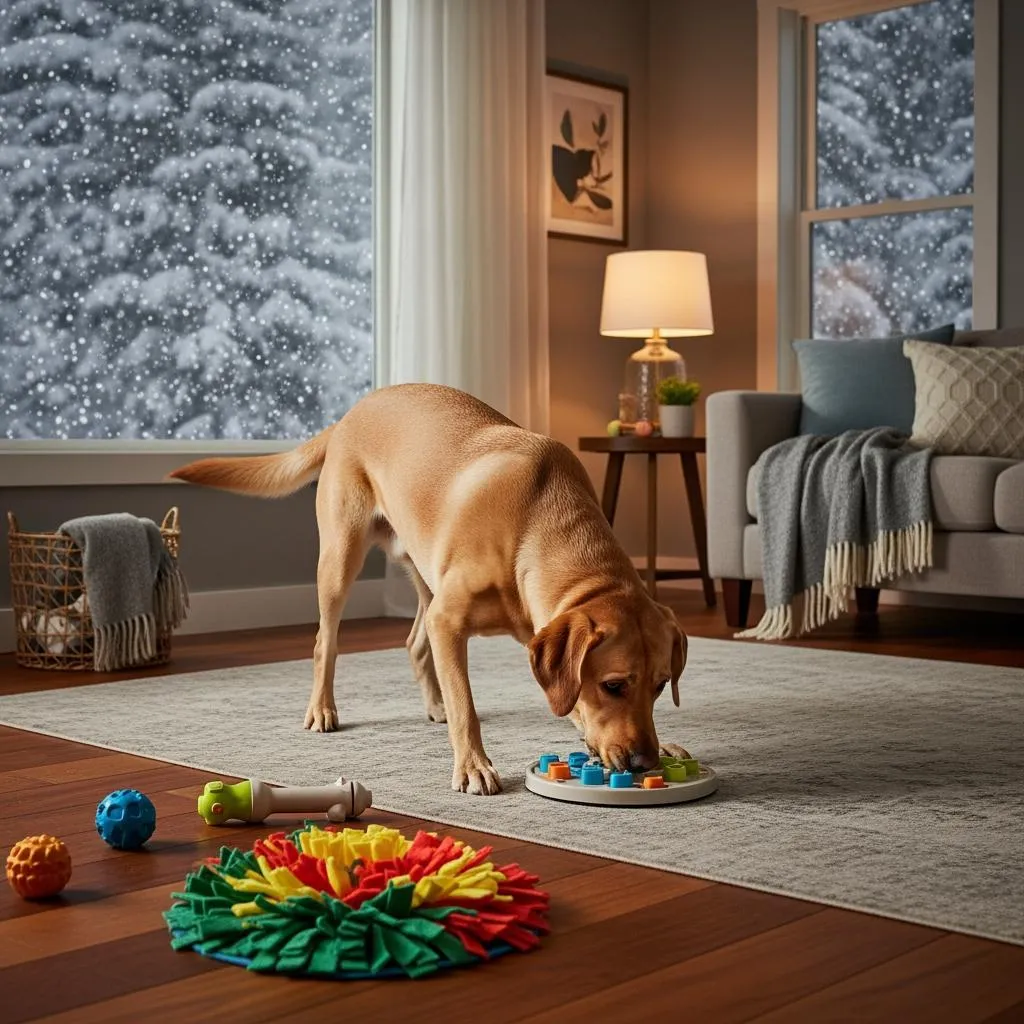
Indoor Exercise Solutions for Dogs: Winter Survival Guide
When the temperature plummets and snow blankets the ground, many dog owners face a familiar dilemma: a restless, energetic dog and nowhere to safely exercise them. As Sarah watched her Labrador Retriever, Max, pace anxiously by the door for the third day in a row, she knew she needed solutions—fast. The park was buried under eight inches of snow, and the bitter cold made even quick potty breaks uncomfortable for both of them.
Sound familiar? Winter weather challenges can turn your normally well-exercised companion into a bundle of pent-up energy, often resulting in unwanted behaviors like excessive barking, destructive chewing, or hyperactivity. But there's good news: with some creativity and understanding, you can keep your dog physically and mentally stimulated without setting foot outside your home.
Understanding Your Dog's Exercise Needs
Dogs, like humans, have varying energy levels and exercise requirements. Understanding your specific dog's needs is the first step toward creating effective indoor solutions.
High-Energy Dogs: Breeds like Border Collies, Australian Shepherds, and Labrador Retrievers typically need significant daily exercise. When confined indoors, these dogs often exhibit signs of frustration through behaviors like:
Pacing
Excessive barking
Destructive chewing
Counter-surfing or garbage raiding
Spinning or chasing their tail
Moderate-Energy Dogs: Many sporting breeds, terriers, and mixed-breed dogs fall into this category. They adapt more easily to indoor life but still need regular activity to prevent boredom.
Low-Energy Dogs: Breeds like Basset Hounds, Bulldogs, and many senior dogs require less physical exercise but still benefit from mental stimulation and short activity periods.
Sarah's story illustrates the importance of adapting to your dog's specific needs. Her energetic Lab, Max, was becoming increasingly difficult to manage during a particularly harsh winter. After implementing a structured indoor exercise routine that included both physical and mental activities, she saw a dramatic improvement in his behavior within just three days.
"I was at my wit's end," Sarah recalls. "Max was destroying pillows and barking at every sound. After creating a consistent indoor exercise schedule that included three 15-minute training sessions, two puzzle toy feedings, and several short play sessions throughout the day, he became a different dog. He was actually relaxing between activities instead of pacing constantly."
Mental Stimulation: The Secret Weapon Against Cabin Fever
Many owners underestimate the power of mental exercise. A dog who has been mentally challenged is often more satisfied and relaxed than one who has only had physical exercise. In fact, 15 minutes of focused mental work can be equivalent to 30 minutes of physical exercise in terms of tiring your dog.
Nose Work Games for All Energy Levels
Dogs experience their world primarily through scent. Engaging their natural sniffing abilities provides incredible mental stimulation regardless of your dog's energy level.
Basic Find It Game:
Show your dog a high-value treat or favorite toy
Ask them to stay (or have someone hold their collar)
Hide the item in an easy spot within view
Return and release them with "Find it!"
Celebrate enthusiastically when they discover the treasure
Gradually increase difficulty by hiding items in more challenging locations
Snuffle Mat Feeding:
Instead of using a regular bowl, scatter your dog's meal in a snuffle mat (a textured mat with fabric strips where food can be hidden). This turns mealtime into a 15-20 minute mental workout as your dog uses their nose to find each piece of kibble.
Muffin Tin Game:
Place treats in a few cups of a muffin tin and cover all cups with tennis balls. Your dog must figure out how to remove the balls to find the hidden treasures.
Problem-Solving Toys and Puzzles
Interactive toys that dispense treats challenge your dog's problem-solving abilities and keep them engaged for extended periods.
Puzzle Toy Progression:
Start with simpler puzzles and gradually introduce more complex ones as your dog masters each level. Rotating between different puzzles prevents boredom.
DIY Food Puzzles:
Wrap treats in a towel for your dog to unravel
Place kibble in an empty cardboard box with some crumpled paper
Freeze kibble and water in an ice cube tray for a longer-lasting challenge
Treat-Dispensing Balls:
These toys require physical movement to release food, combining mental stimulation with light physical activity.
Training Sessions as Exercise
Short, focused training sessions provide excellent mental stimulation while strengthening your relationship.
New Tricks:
Teaching a new trick or command engages your dog's brain intensely. Aim for 3-5 minute sessions, several times daily.
Skill Chains:
Link several known commands together in different sequences to create a mental challenge:
Sit → Down → Stand → Spin → Sit
Come → Sit → High Five → Down
Target Training:
Teach your dog to touch their nose to your hand or a target stick. Once mastered, you can create indoor obstacle courses by having them touch targets placed around the room.
Physical Exercise Solutions That Won't Destroy Your Home
While mental stimulation is crucial, most dogs still need some physical outlet, especially those with higher energy levels.
Indoor Fetch Variations
Hallway Fetch:
A long hallway can become a fetch runway. Use soft toys to prevent damage.
Gentle Toss and Return:
For smaller spaces, sitting on the floor and gently tossing a toy just a few feet away still provides exercise in a controlled manner.
Fetch with Rules:
Incorporate commands like "wait," "take it," and "drop it" to add mental challenge to the physical game.
Stair Workouts and Hallway Sprints
If you have stairs in your home, they can become an excellent exercise tool:
Stair Fetch:
Toss a toy up the stairs for your dog to retrieve and bring back down.
Controlled Recalls:
Have one person hold your dog at the bottom of the stairs while you call them from the top (or vice versa).
Hallway Sprints:
For homes without stairs, set up a recall game where family members sit at opposite ends of a hallway and take turns calling the dog back and forth.
Mike, owner of a 9-year-old Golden Retriever named Buddy, found that modified stair exercises were perfect for his aging companion:
"Buddy has arthritis, so our usual long walks became impossible during winter. I started having him do just 3-4 controlled trips up and down the stairs each day, following me at a moderate pace. It maintained his muscle tone without stressing his joints, and the mental stimulation of following commands kept him engaged."
Tug Games with Rules
Tug is an excellent indoor exercise when played with clear boundaries:
Rules for Structured Tug:
The game starts and stops on your command
"Drop it" means immediately releasing the toy
No teeth on skin ever (game immediately ends)
Keep the toy low to prevent jumping or pulling upward
Tug as Training:
Incorporate commands throughout the game: "Take it," "Drop it," "Wait," "Leave it," then "Take it" again.
Strengthening Your Bond Through Indoor Activities
Winter confinement offers a unique opportunity to deepen your connection with your dog through focused interaction.
Interactive Games That Build Trust
Hide and Seek:
Have your dog stay while you hide, then call them to find you. This reinforces recall while creating a fun bonding experience.
The Name Game:
Place several toys on the floor and teach your dog to retrieve specific ones by name. Start with two distinct toys and gradually add more as they learn.
Follow Me:
Move around your home in unpredictable patterns, rewarding your dog for staying with you. This reinforces attention and connection.
Calm Connection Activities
Guided Relaxation:
Teach your dog to enjoy calm massage sessions. Start with short periods (30 seconds) and gradually extend the time as they learn to relax.
Settling Practice:
Reward your dog for choosing to lie down calmly near you while you read or watch TV. Initially reward frequently, then gradually extend the time between rewards.
Teaching New Tricks
Learning together creates a special bond between you and your dog:
Practical Indoor Tricks:
"Go to your place" (directing to a bed or mat)
"Middle" (moving between your legs)
"Back up" (moving backward)
"Left" and "Right" (turning in specific directions)
Trick Sequences:
Chain several tricks together to create a routine that exercises both mind and body.
Emma, who adopted an anxious mixed-breed dog just before winter, found that indoor trick training transformed their relationship:
"Luna was so nervous around new people and situations. During our first winter together, we couldn't do much socialization outdoors, so I focused on teaching her tricks instead. Not only did it burn energy, but I could see her confidence growing with each new skill she mastered. By spring, she was a different dog—more confident and focused on me rather than her surroundings."
Creating an Indoor Exercise Schedule That Works
Consistency is key to managing indoor energy effectively. Creating a schedule helps ensure your dog gets adequate stimulation throughout the day.
Sample Schedules for Different Energy Levels
High-Energy Dogs:
Morning: 15-minute training session + puzzle toy breakfast
Mid-morning: 10-minute tug or fetch session
Noon: 15-minute nose work game
Afternoon: 10-minute training + stuffed Kong
Evening: 15-minute stair exercise or hallway sprints
Before bed: 10-minute relaxation massage
Moderate-Energy Dogs:
Morning: Puzzle toy breakfast
Mid-morning: 10-minute training session
Afternoon: 15-minute nose work or interactive game
Evening: 10-minute fetch or tug
Before bed: Settling practice with occasional rewards
Low-Energy Dogs:
Morning: Snuffle mat breakfast
Mid-day: 5-minute training session
Afternoon: Gentle interactive play
Evening: Nose work game
Throughout day: Short engagement periods with longer rest
Tips for Consistency
Set alarms on your phone to remind you of activity times
Prepare in advance by setting out toys and treats the night before
Track your dog's behavior to identify the most effective activities
Adjust as needed based on your dog's response and energy level
Involve all family members in the schedule
When to Brave the Elements vs. Stay Inside
While this guide focuses on indoor solutions, there will be times when a quick outdoor excursion is necessary or possible.
Safety Considerations
Always prioritize safety when deciding whether to venture outdoors:
Temperatures below 20°F can be dangerous for most dogs
Consider your dog's breed, age, and coat type
Watch for signs of cold stress: shivering, anxiety, lifting paws
Be aware of salt and chemicals on sidewalks that can harm paws
Quick Outdoor Options
When conditions allow for brief outings:
Use a sheltered area near your home for potty breaks
Consider a quick 5-minute sniffing expedition rather than a walk
Use boots and coats for sensitive dogs
Wipe paws thoroughly upon returning inside
Thriving, Not Just Surviving
With thoughtful planning and creativity, winter confinement can become an opportunity rather than a challenge. The indoor activities outlined in this guide do more than just burn energy—they strengthen your relationship, improve your dog's mental capabilities, and often result in better behavior year-round.
Many owners discover that the focused attention and training during winter months actually improves their dog's overall behavior even after outdoor activities resume. The mental stimulation and relationship-building aspects of these indoor activities create lasting benefits that extend well beyond the winter season.
By incorporating a balance of physical exercise, mental challenges, and bonding activities, you can help your dog not just survive the winter months, but truly thrive during them.
Are you struggling with a dog who's bouncing off the walls during these cold winter days? You don't have to face this challenge alone. Our Canine Connection Compass methodology includes specific techniques for managing indoor energy and building focus that can transform your winter experience.
Call me at (248) 618-3258 or email [email protected] to discuss how we can help your dog channel their energy positively, even when outdoor options are limited. Our proven approach has helped hundreds of dogs learn to settle indoors while still getting the stimulation they need.
Remember, a tired dog is a happy dog—and with these indoor solutions, you can have a peaceful home even when winter keeps you inside.
Happy training!
Mandy Majchrzak
Owner and Head Trainer
Clever Canine Dog Training
Metro Detroit's Family Dog Training Specialists