Holiday Triggers: Managing Your Dog's Leash Reactivity During the Festive Season
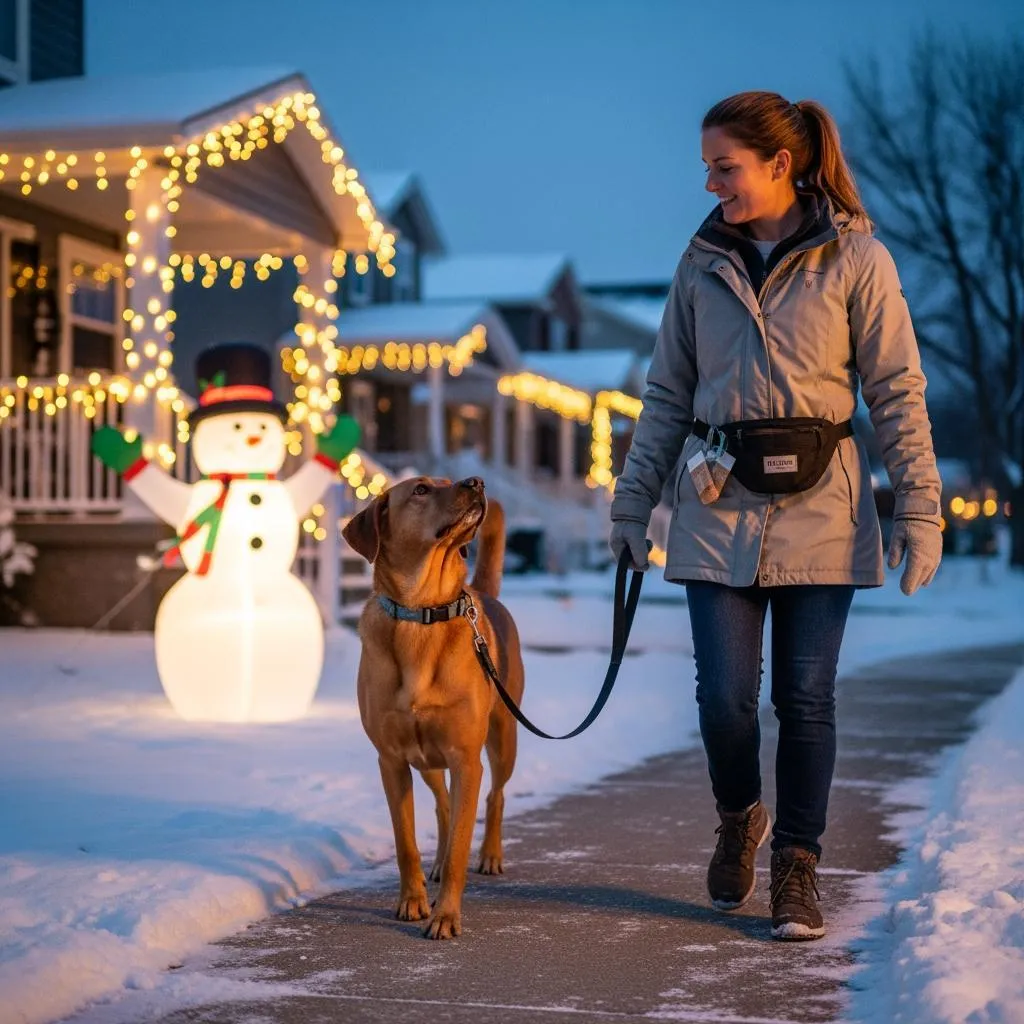
The joyful sound of sleigh bells quickly turns into the jangling chaos of a tense leash as your dog lunges toward a neighbor's snowman decoration. What should be a peaceful evening stroll to enjoy holiday lights becomes an embarrassing tug-of-war that leaves both you and your dog stressed and frustrated.
If this scenario sounds painfully familiar, you're not alone. Welcome to the second installment of our "Top 4 Training Problems of 2025" countdown, where we're tackling one of the most common and frustrating issues dog owners face: leash reactivity. And during the holiday season? This problem often intensifies.
At Clever Canine, leash reactivity and pulling rank as our #3 most requested training concern year-round. But during the holiday season, we see a significant spike in calls from frustrated owners whose dogs seem to become even more reactive amid the festive chaos.
The good news? With the right approach, you can transform those stressful "jingle bell jolts" into peaceful winter walks. Let's explore why the holidays trigger increased reactivity and what you can do about it—both immediately and for long-term success.
Why Holiday Season Amplifies Leash Reactivity
Understanding why your dog's leash behavior worsens during the holidays is the first step toward addressing it. Several factors create this perfect storm:
1. Environmental Changes
Your dog relies on familiarity and predictability. Suddenly, the neighborhood transforms with new visual stimuli:
Inflatable decorations that move and make noise
Flashing lights creating unusual shadows
Unfamiliar objects (like lawn ornaments) appearing overnight
Neighbors rearranging outdoor spaces for decorations
These changes can trigger fear, uncertainty, and hypervigilance in many dogs.
2. Schedule Disruptions
The holiday season rarely maintains your regular routine:
Shopping trips mean walks happen at different times
Visitors disrupt the household schedule
Holiday events change your availability for regular exercise
Dogs thrive on consistency, and these disruptions can increase anxiety that manifests as leash reactivity.
3. Human Stress Transfer
Dogs are remarkably attuned to our emotional states. The stress many humans feel during the holidays—shopping pressure, family dynamics, end-of-year deadlines—travels right down the leash to our dogs.
Dogs don't just react to what they see. They react to tension in the leash, changes in our breathing, and subtle shifts in our body language when we get stressed or anticipate a problem.
4. Winter Clothing Changes Human Appearance
People bundled in winter coats, hats, and scarves look dramatically different to dogs. This change in human appearance can trigger fear responses in dogs who might otherwise be comfortable with people.
5. Concentrated Triggers in Limited Spaces
Winter weather often restricts where we can walk our dogs. Snow-covered parks might be inaccessible, leaving sidewalks and concentrated areas as the only options. This means:
Less space to create distance from triggers
More likelihood of encountering other dogs in limited walking areas
Fewer opportunities to burn energy before facing challenging situations
Immediate Management Solutions for Holiday Walks
While long-term training is essential, you need solutions now. Here are immediate strategies to make holiday walks more manageable:
1. Strategic Timing
Adjust your walking schedule to avoid high-traffic times:
Early morning walks before decorations are illuminated
Mid-day walks when fewer people are out
Weekday walks instead of busy weekends when more families are viewing decorations
2. Pattern Interruption Techniques
When you notice your dog beginning to focus on a trigger:
Use a cheerful voice to say "Look at that!" then immediately treat when they glance at the trigger
Carry a squeaky toy to redirect attention before reactivity escalates
Practice "Find it!" by tossing treats on the ground to engage their sniffing instincts
3. Emergency U-Turns
When you spot a trigger that's too challenging:
Say "This way!" in an upbeat tone
Turn 180° using your body to block your dog's view
Move quickly away with treats to reward the direction change
4. Mental Preparation
Your mindset dramatically affects your dog's behavior:
Before walks, take three deep breaths to center yourself
Have a plan for common triggers you might encounter
Accept that some walks might need to be cut short
Remember that management is not failure—it's smart training
Foundation Training to Address the Root Cause
While management helps in the moment, training addresses the underlying issues. These fundamental exercises build the skills your dog needs:
Engagement Games: The Foundation of Focus
The core skill reactive dogs need is the ability to maintain focus on their handler instead of triggers. Practice these games daily, starting in low-distraction environments:
1. Name Game
Say your dog's name in a happy voice
Mark with "Yes!" the moment they look at you
Immediately reward with a high-value treat
Practice 10 times daily in different locations
2. Watch Me
Hold a treat near your eye
Say "Watch me" in a clear, upbeat tone
Mark with "Yes!" when they make eye contact
Gradually increase the duration before marking
Progress to using the cue without showing the treat first
3. Find It
Show your dog a treat, then toss it a few feet away saying "Find it!"
When they find the treat, call their name
Mark with "Yes!" when they look back at you
Reward with another treat from your hand
These games build the habit of checking in with you, which is crucial when distractions appear.
Loose-Leash Walking Fundamentals
A dog that walks nicely on leash in calm environments has a foundation to build upon when challenges arise:
1. Stop-and-Go Technique
Begin walking and stop when your dog pulls
Wait silently until they create slack in the leash
Mark with "Yes!" and continue walking as the reward
Repeat consistently to teach that pulling pauses progress
2. Direction Changes
Walk in unpredictable patterns—circles, figure-eights, zigzags
Change direction frequently using your voice cue "This way!"
Reward when your dog follows your direction change
3. Reward Zone Training
Define your "reward zone" (the position where you want your dog to walk)
Mark and treat frequently when your dog is in this position
Gradually reduce treat frequency as the position becomes habit
Threshold Training: The Key to Reactivity
Understanding and respecting your dog's threshold is critical:
1. Identify Your Dog's Threshold
The threshold is the distance at which your dog notices a trigger but can still respond to you
This distance will vary based on the specific trigger and environment
Work at a distance where your dog can still take treats and respond to cues
2. Gradual Exposure
Begin working at a distance well beyond your dog's threshold
Reward calm behavior and focus on you
Very gradually decrease distance as your dog shows comfort
If your dog shows stress signals, increase distance immediately
3. Trigger = Treats
When a trigger appears at a manageable distance, begin feeding small treats rapidly
Stop treats when the trigger disappears
This creates a positive association: triggers predict good things
A Holiday Transformation: Jessica and Cooper's Story
Jessica dreaded walking her 2-year-old Lab mix, Cooper, during the holidays. "Last year was a nightmare," she told us. "Cooper would lunge and bark at every inflatable decoration. We basically stopped walking after dark because it was so embarrassing."
Cooper's reactivity wasn't limited to decorations—other dogs, joggers, and even people with shopping bags would set him off. But the holiday season amplified everything.
After implementing our training program focused on engagement and threshold work, Jessica saw remarkable changes:
"We started with the basics—just practicing 'watch me' in our living room, then the yard, then the quietest street in our neighborhood. We gradually worked up to busier areas."
The key breakthrough came with threshold training. "I learned to spot Cooper's early warning signs—his ears would perk up and his body would stiffen slightly before a full reaction. That's when I'd use our 'look at that' game or do a quick direction change."
Jessica and Cooper were able to walk past several houses with inflatable decorations without incident. "He still notices them, but now he looks at them, then looks back at me as if to say, 'Did you see that, Mom?' Instead of barking, he's checking in with me."
Jessica's most proud moment? "Recently we walked through a neighborhood known for its holiday lights. Cooper was calm enough that my son could join us. It was the family walk I'd always wanted."
Building Success One Step at a Time
Transforming a reactive dog doesn't happen overnight, especially during the stimulating holiday season. Remember these principles as you work with your dog:
1. Consistency Trumps Intensity
Short, successful training sessions (5-10 minutes) daily are more effective than occasional long sessions
Every walk is a training opportunity
Maintain the same expectations and responses across all family members
2. Progress Is Rarely Linear
Expect good days and challenging days
After a setback, return to an easier environment to rebuild confidence
Celebrate small improvements rather than focusing on perfect behavior
3. Management Is Part of Training
Sometimes avoiding a trigger is the right choice for that day
Using management tools (like walking at quieter times) isn't cheating—it's smart training
4. The Human-Canine Connection Matters Most
Building trust through predictable responses helps your dog feel secure
Your dog needs to know you'll protect them from overwhelming situations
The quality of your relationship directly affects your dog's reactivity
Moving Forward With Confidence
The holiday season doesn't have to mean two months of stressful walks and embarrassing moments with your reactive dog. With thoughtful management techniques for immediate relief and consistent training for long-term success, you can begin transforming those jingle bell jolts into joyful winter strolls.
Remember that leash reactivity is fundamentally about emotional responses—your dog's and yours. By addressing both through proper training techniques, you create the foundation for lasting change.
If you're struggling with a leash-reactive dog this holiday season, you don't have to face it alone. Our Canine Connection Compass methodology has helped hundreds of dogs overcome leash reactivity through our balanced, relationship-based approach.
Call me at (248) 618-3258 or email [email protected] to discuss how we can transform your dog's leash reactivity into calm, enjoyable walks. Our proven Canine Connection Compass methodology has helped hundreds of Metro Detroit dogs learn to walk calmly past even the most distracting holiday decorations.
The gift of peaceful walks is one that keeps giving long after the holidays are over. Let us help you unwrap it this season.
Happy training!
Mandy Majchrzak
Owner and Head Trainer
Clever Canine Dog Training
Metro Detroit's Family Dog Training Specialists