What to Do When Your Dog Won't Come When Called
Most owners assume their dog is being stubborn, dominant, or just plain difficult. I want to let you off the hook on that one — dogs don't ignore recall out of spite. They ignore it because somewhere along the way, "come" stopped being worth their while.
Think about it from your dog's perspective. Every single time they come to you, something happens. Sometimes that something is wonderful — a treat, a belly rub, a game of fetch. But sometimes? You clip the leash on and the fun ends. Or you call them inside from the yard. Or you check their paws for mud and they don't love that. Or — and this is the big one — they finally come after you've called six times, and you're frustrated, so your tone is sharp and your body language is tense.
They came. And it wasn't great.
Dogs learn through repetition and consequence. When "come" repeatedly predicts neutral or negative outcomes, dogs start making a different choice. And when you're competing with the smell of a squirrel or the excitement of another dog at the park, "come" needs to win that competition every single time.
That's a tall order if the word has been diluted.
The Mistake Almost Every Owner Makes
I want to talk about the single most common recall-killing habit I see, because once you're aware of it, you can't unsee it.
Never punish a dog for coming to you. Ever. Even if it took forever.
I know how hard this is. Your dog ran off, ignored you for five minutes, made you look ridiculous in front of other people, and then finally sauntered over. Every instinct says to communicate your frustration.
But here's the thing — your dog doesn't understand that you're upset about the five minutes of ignoring. They only understand the moment they arrived. If they get scolded, or even just get a cold, clipped tone when they reach you, they are learning that coming to you has an unpredictable cost.
Next time, they will think twice.
The golden rule of recall is this: When your dog comes to you, it is always the right decision, and it always gets celebrated. No exceptions. No matter how long it took. No matter what they were doing before. The moment four paws arrive in front of you is a party.
This is not soft training. This is smart training. You are building a reflex — a deeply conditioned response that coming to you is the best possible outcome in any situation.
The Two-Week Recall Reset
If "come" is already poisoned — meaning your dog has learned to hesitate or ignore it — the most effective thing you can do is start fresh with a new word. Seriously. Pick a new recall cue: "here," "front," "this way," whatever you like. You're going to build this word from scratch with zero negative history attached to it.
Here's a simple two-week framework to rebuild a rock-solid recall.
Week One: The Foundation
During week one, your only job is to make the new recall word the best word your dog has ever heard. You're not testing it yet. You're charging it.
Start indoors with zero distractions. Say your new word once, in a happy voice, and the moment your dog looks at you or takes a step toward you — celebrate like they just won the Super Bowl. Use whatever your dog finds most valuable: high-value treats (think chicken, cheese, or hot dog — not kibble), enthusiastic praise, a quick game with a tug toy. Whatever makes her eyes light up.
Do this 10 to 15 times a day in short sessions. Keep it fun. Keep it easy. You want a 100% success rate this week.
A client of mine — I'll call her Sandra — was ready to give up on off-leash time entirely with her three-year-old golden mix, Cooper. He had a habit of taking himself on unauthorized neighborhood tours the moment the front door cracked open. We started his recall reset using the word "here" and within four days, he was sprinting to Sandra from across the yard every single time. "I honestly didn't believe it would work this fast," she told me. It works because you're making the right choice irresistible.
Week Two: Adding Distance and Mild Distraction
Once your dog is flying to you indoors, it's time to raise the stakes — slowly.
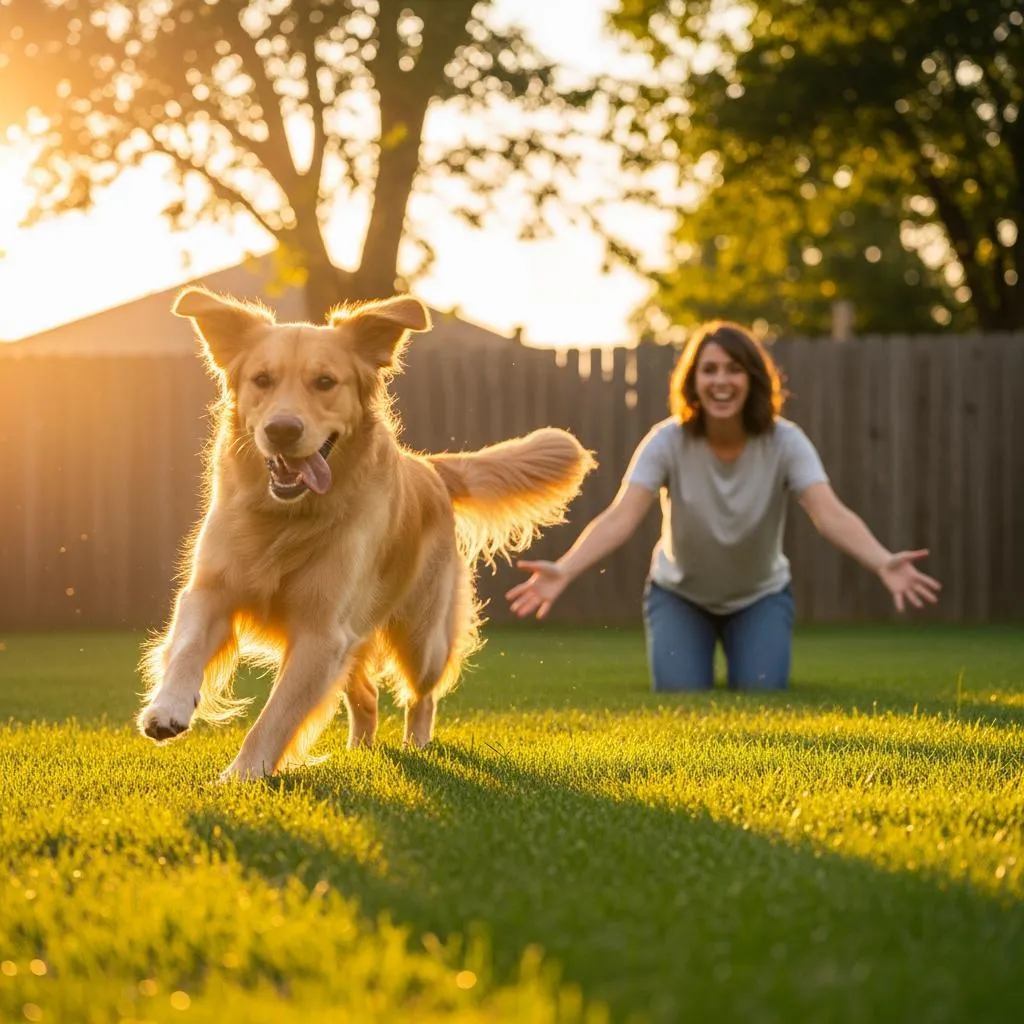
Move the game outside to a low-distraction area like a fenced backyard. Use a long line (a 20 to 30 foot leash) so your dog has some freedom but you have a safety net. Call your recall word, back up a few steps to encourage movement toward you, and celebrate hugely when they arrive.
Gradually increase the distance. Gradually increase the distractions. The key word is gradually. If your dog stops responding, you've moved too fast — dial back the difficulty and rebuild from there.
By the end of week two, most dogs with mild to moderate recall issues are showing meaningful improvement. It won't be perfect yet. Recall is one of those skills that needs to be practiced for life, in new environments, against new distractions. But you'll have a working foundation to build on.
What NOT to Do When Recall Goes Wrong
A few things to avoid as you're rebuilding:
Don't repeat the command. If you call your dog and they don't come, calling again only teaches them that the first call doesn't count. Say it once. If they don' respond, use your long line to gently guide them toward you, then celebrate anyway. Over time they'll learn one call means business.
Don't chase them. Running after your dog turns the whole thing into a game — and they are faster than you. Instead, turn and run the other direction. Most dogs can't resist a human running away from them.
Don't call them to you for anything they don't enjoy. If bath time is coming, go get them. If you need to end a fun play session, go to them and leash up. Save your recall for moments you can reward it, especially in the early stages of training.
Don't practice off-leash in unfenced areas until you have a reliable response on a long line. This isn't about being overprotective — it's about setting your dog up to succeed. Every time they ignore a recall in a real environment, it practices the wrong behavior. Every time they respond, it practices the right one.
Making "Come" the Best Word She's Ever Heard
The owners who have the most success with recall share one thing in common: they never let it become boring or routine. They vary the rewards. Sometimes it's a jackpot of treats. Sometimes it's a favorite toy appearing out of nowhere. Sometimes it's a wild, ridiculous celebration that makes their neighbors wonder about them.
Keep your dog guessing about what amazing thing might happen when they come to you. That unpredictability — the slot machine effect — actually makes the behavior stronger over time, not weaker.
I worked with a retired couple, Jim and Pat, who adopted a two-year-old beagle named Hank. Beagles are notoriously nose-driven, and Hank would hit a scent trail and disappear into the woods behind their property. Within three weeks of consistent recall work using a long line and high-value treats, Hank was coming off scent trails reliably. Jim called me on a Tuesday morning just to say he'd called Hank off a rabbit chase for the first time. "I didn't think that was possible," he said. It is absolutely possible. It just takes building the right history.
When to Get Help
Some dogs have recall challenges that go beyond basic training — severe anxiety, a history of trauma, or deeply ingrained habits that have been practiced for years. If you've been working on recall consistently for several weeks and aren't seeing progress, or if your dog's behavior creates genuine safety concerns, that's a good sign it's time to bring in a professional.
A good trainer won't just work with your dog — they'll help you understand what's driving the behavior, show you exactly what to do, and troubleshoot in real time. The goal is to give you the skills to maintain it long after the training is done.
If your dog's recall has you worried — whether it's a safety concern near traffic or just the daily frustration of being ignored — I'd love to help you work through it. Recall is one of those skills that truly can transform your daily life with your dog, and it's almost always fixable with the right approach.
Call me at (248) 618-3258 or email [email protected] to talk through what's going on and figure out the best next step for you and your dog. Our proven Canine Connection Compass methodology has helped hundreds of Metro Detroit dogs build the kind of reliable recall their owners never thought was possible.
You don't have to dread every off-leash moment. This is absolutely something we can fix together.
Happy training!
Mandy Majchrzak
Owner and Head Trainer Clever Canine Dog Training
Metro Detroit's Family Dog Training Specialists