How to Get Your Dog to Listen When Guests Arrive | Party-Proof Training
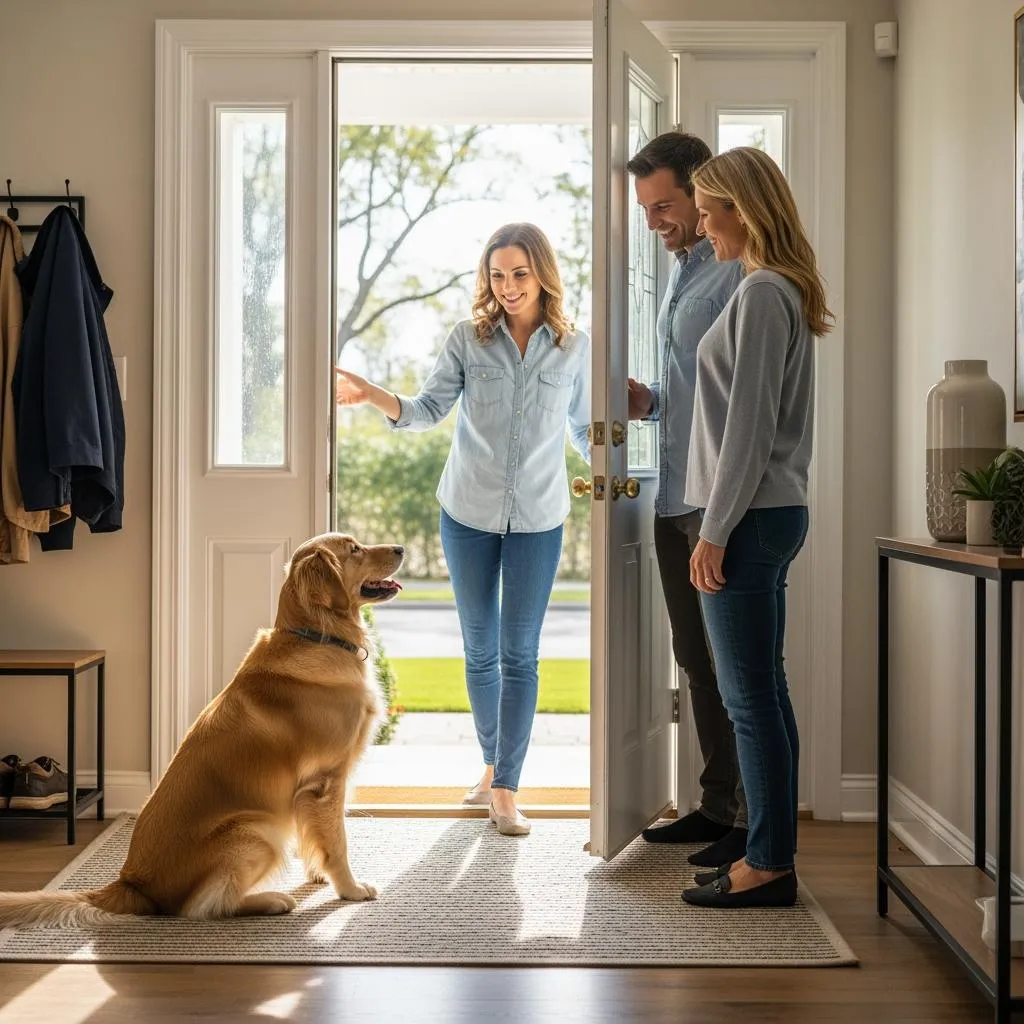
The doorbell rings. Your heart sinks.
You know exactly what's about to happen: your otherwise well-behaved dog is about to transform into a selective listener who suddenly "forgets" every command they've mastered. The jumping, the barking, the chaos that follows – it's enough to make you think twice about hosting gatherings altogether.
This frustrating scenario plays out in homes everywhere, especially during holiday gatherings when the stakes feel even higher. The good news? This selective listening isn't a sign of a stubborn dog or failed training – it's actually a normal challenge that can be overcome with the right approach.
At Clever Canine, we've helped hundreds of dogs transform from selective listeners to reliable companions, even in exciting situations. Using our Canine Connection Compass methodology, we'll show you how to get your dog to listen consistently, even when your home is filled with guests.
Why Your Dog Suddenly "Forgets" All Training When Guests Arrive
Your dog isn't being stubborn or willfully disobedient when they ignore commands around guests. What's actually happening is a perfect storm of excitement, arousal, and insufficient training generalization.
Dogs experience different arousal levels depending on the situation. When your dog is calm and focused at home during regular training, they're in an optimal learning state. But when guests arrive, their arousal level skyrockets – adrenaline pumps, excitement builds, and their brain essentially switches to a different operating mode where previously learned behaviors become harder to access.
This is similar to how a person who can easily solve math problems in a quiet classroom might struggle with the same problems if asked to solve them while riding a roller coaster. The environment matters tremendously.
Additionally, dogs don't naturally generalize well. Just because your dog sits perfectly in your quiet living room doesn't mean they understand that "sit" means the same thing when there's a new person at the door. To your dog, these might seem like completely different scenarios requiring different responses.
The good news? Understanding these factors means we can create a training plan that works with your dog's psychology, not against it.
The Party-Proof Training System: Building Reliability Step by Step
The key to success is a systematic approach that gradually builds your dog's ability to listen in increasingly distracting environments. This isn't about teaching new commands – it's about making existing commands bombproof in any situation.
Phase 1: Strengthening Core Commands in Zero Distraction Environments
Before tackling the challenge of guests, ensure your dog's basic obedience is rock-solid in a distraction-free environment.
Choose your essential commands: Focus on 3-4 key behaviors that matter most around guests (typically sit, down, place, and leave it).
Implement the 3D method: Duration, Distance, Distraction – but start with zero distraction. Work on having your dog hold commands for increasing durations and from increasing distances.
Use high-value rewards: When strengthening behaviors, use treats your dog finds irresistible to create powerful positive associations.
Lisa, one of our clients, was frustrated with her Golden Retriever who would sit for two seconds before jumping on guests. After working on duration sits with high-value rewards, her dog could maintain a sit for over a minute, creating the foundation for better guest manners.
Phase 2: Adding Controlled Distractions Gradually
Once your dog performs reliably in calm environments, it's time to systematically add distractions:
Start with mild distractions: Have a family member walk by while your dog holds a stay. Bounce a ball. Play quiet music.
Increase to moderate distractions: Add movement, louder noises, or toys being played with nearby.
Use the "1+1" rule: Only increase difficulty when your dog can successfully perform with the current level of distraction 5 times in a row.
Reward heavily for success in difficult scenarios: The more challenging the environment, the more valuable the reward should be.
Remember, this phase might take weeks depending on your dog's temperament. James, who owns an easily excited Labrador, spent three weeks gradually increasing distractions before moving to the next phase – and that patience paid off tremendously.
Phase 3: The "Fake Guest" Training Method
This powerful technique bridges the gap between training sessions and real-world application:
Role-play guest arrivals: Have family members go outside and "arrive" like a guest would – knocking, entering with excitement, etc.
Practice with a leash initially: Keep your dog on leash during these scenarios to prevent rehearsal of unwanted behaviors.
Use the "Doorbell = Place" association: Train your dog that the sound of the doorbell is their cue to go to their designated place and stay there.
Reward calm behavior extensively: When your dog maintains position during "fake guest" arrivals, provide significant rewards.
The Martin family transformed their German Shepherd's door-charging behavior using this exact method. After two weeks of consistent practice, their dog would automatically go to his bed when the doorbell rang – a behavior that impressed their actual guests when they tested it during a dinner party.
Phase 4: Real-World Practice with Supportive Friends
Before testing your dog with unfamiliar guests, recruit friends who understand your training goals:
Brief your helpers thoroughly: Explain exactly what you're working on and how they should interact with your dog.
Start with calm, dog-savvy visitors: Your first real tests should be with people who will follow your instructions precisely.
Create success scenarios: Initially keep these visits short, structured, and designed for your dog to succeed.
Use the "Three Strikes" rule: If your dog breaks position three times during a practice visit, they need more work at the previous level.
Emma's reactive Beagle would bark incessantly at guests until she implemented this phased training approach. She started with a dog-savvy neighbor visiting for just 10 minutes, and within a month, her dog could remain calm with multiple guests for entire evenings.
Management Strategies for Success (Even Before Training is Complete)
While working through the training phases, you can implement these management strategies for immediate improvement:
The Pre-Guest Exercise Plan (Tired dogs listen better)
A physically and mentally tired dog is more likely to listen even without perfect training:
Schedule intense exercise before guests arrive: A 30-minute play session or brisk walk can significantly reduce excess energy.
Add mental stimulation: Puzzle toys, snuffle mats, or training sessions before guests arrive can help tire your dog's brain.
Practice the 70/30 rule: Aim for 70% physical exercise and 30% mental stimulation for optimal results.
Creating a Guest-Greeting Protocol
Establish a clear routine that everyone follows when guests arrive:
The 3-minute rule: No guest interaction for the first three minutes after arrival allows your dog to settle.
Controlled greetings only: Guests should only greet your dog when they're calm and following commands.
Consistent entry procedure: Everyone (including family members) should follow the same entry routine to build predictability.
Reward-based interactions: Give guests appropriate treats to reward calm behavior.
Safe Spaces and Breaks: When Your Dog Needs a Time-Out
Even well-trained dogs benefit from breaks during extended gatherings:
Designate a quiet retreat space: Set up a comfortable area where your dog can take breaks from the stimulation.
Recognize stress signals early: Learn to identify when your dog needs a break before they become overwhelmed.
Use enrichment tools: A stuffed Kong or long-lasting chew in their safe space can keep them happily occupied.
Schedule mandatory breaks: During longer gatherings, proactively give your dog 20-30 minute breaks, even if they seem to be handling things well.
Clear Communication Tools for Different Situations
Enhance your ability to communicate with your dog in challenging environments:
Use a marker word or clicker: A distinct signal that cuts through the noise helps your dog understand when they've done something right.
Implement hand signals: Visual cues often work better than verbal commands in noisy environments.
Consider a station training approach: Teaching your dog to go to a specific spot (mat, bed, crate) gives them clarity about expectations.
Use management tools when needed: A leash, baby gate, or tether can be helpful training aids while building reliability.
Success Story: From Chaos to Calm
The Anderson family reached out to us after their Goldendoodle, Max, made hosting gatherings nearly impossible. While Max was perfectly behaved when it was just the family at home, he transformed into a jumping, barking tornado whenever guests arrived. The final straw came during a holiday dinner when Max knocked over their grandmother and stole a roast from the table.
Using the Party-Proof Training System, the Andersons first strengthened Max's basic obedience in distraction-free environments. They then gradually added distractions, practiced extensively with "fake guests," and finally brought in understanding friends for controlled real-world practice.
The transformation wasn't immediate – it took about six weeks of consistent work – but the results were remarkable. At their next family gathering, Max calmly went to his place when the doorbell rang and remained there until released. When allowed to greet guests, he approached calmly without jumping. The Andersons could finally enjoy hosting without the stress of managing chaotic dog behavior.
"We went from dreading having anyone over to confidently hosting dinner parties," shared Mrs. Anderson. "The systematic approach made all the difference – Max understood exactly what was expected of him in each situation."
Common Mistakes Dog Owners Make with Guest Training
Avoid these pitfalls that can undermine your training efforts:
Expecting too much too soon: Many owners attempt to go from basic home training straight to perfect behavior with a houseful of guests. This massive jump in difficulty sets dogs up for failure.
Inconsistent expectations between family members: If one person allows jumping while another doesn't, your dog receives mixed messages that create confusion.
Not preparing guests for their role in training: Well-meaning visitors who encourage excited behavior can undo weeks of training in minutes.
Skipping the management phase: Trying to train without proper management leads to repeated failures that strengthen unwanted behaviors.
Punishing rather than redirecting: Harsh corrections during exciting situations often backfire, creating anxiety around guests rather than improved behavior.
Overlooking the impact of seasonal changes: Many owners don't account for how winter cabin fever or summer excitement can affect their dog's behavior around visitors.
Holiday-Specific Considerations for Dog Owners
Holidays present unique challenges that require special attention:
Managing multiple guests in smaller spaces
Create clear boundaries: Use baby gates or exercise pens to establish dog-free zones when needed.
Implement a rotation system: If space is limited, consider rotating your dog between their safe space and supervised social time.
Set up strategic stations: Position your dog's place command mat or bed where they can observe without being in the way.
Dealing with winter energy when outdoor exercise is limited
Indoor enrichment games: Hide treats around the house, use puzzle toys, or play hallway fetch before guests arrive.
Nosework activities: Scent games provide excellent mental stimulation that can tire your dog as effectively as physical exercise.
Training sprints: Several short, intense training sessions can burn energy and reinforce obedience simultaneously.
Specific holiday triggers (food, decorations, schedule changes)
Practice around holiday-specific items: If your dog gets excited by Christmas trees or Halloween decorations, include these in your distraction training.
Food-specific impulse control: With holiday meals comes food temptation. Practice "leave it" and boundary respect around food specifically.
Maintain routine despite the chaos: Try to keep your dog's walking and feeding schedule as consistent as possible, even during busy holiday times.
Consider calming aids for extremely stressful events: For dogs who struggle despite training, talk to your vet about natural calming supplements for special occasions.
From Frustration to Enjoyment: Transforming Your Dog's Guest Manners
Implementing the Party-Proof Training System requires consistency and patience, but the results are worth the effort. Remember that this journey isn't just about controlling your dog – it's about giving them the skills and confidence to navigate exciting situations successfully.
The foundation of this transformation lies in understanding that your dog isn't being deliberately disobedient. They simply need clear guidance, systematic training, and consistent expectations to succeed. By building reliability step by step and implementing smart management strategies, you can create a home where both your dog and your guests feel comfortable and welcome.
When your dog learns to listen around visitors, you gain more than just improved behavior – you gain the freedom to enjoy social gatherings without stress or embarrassment. You'll be able to showcase not just your dog's obedience, but the strong bond and clear communication you've developed together.
If you're struggling with a dog who ignores commands when guests arrive, you don't have to face this challenge alone. Our proven Canine Connection Compass methodology has helped hundreds of Metro Detroit dogs transform from selective listeners to reliable companions in all environments.
Call me at (248) 618-3258 or email [email protected] to discuss how we can help your dog become a model host for all your gatherings. Our proven Canine Connection Compass methodology has helped hundreds of Metro Detroit dogs master reliable obedience even in exciting situations.
Remember, a well-mannered dog isn't born – they're created through consistent training, clear communication, and the right guidance.
Happy training!
Mandy Majchrzak
Owner and Head Trainer
Clever Canine Dog Training
Metro Detroit's Family Dog Training Specialists