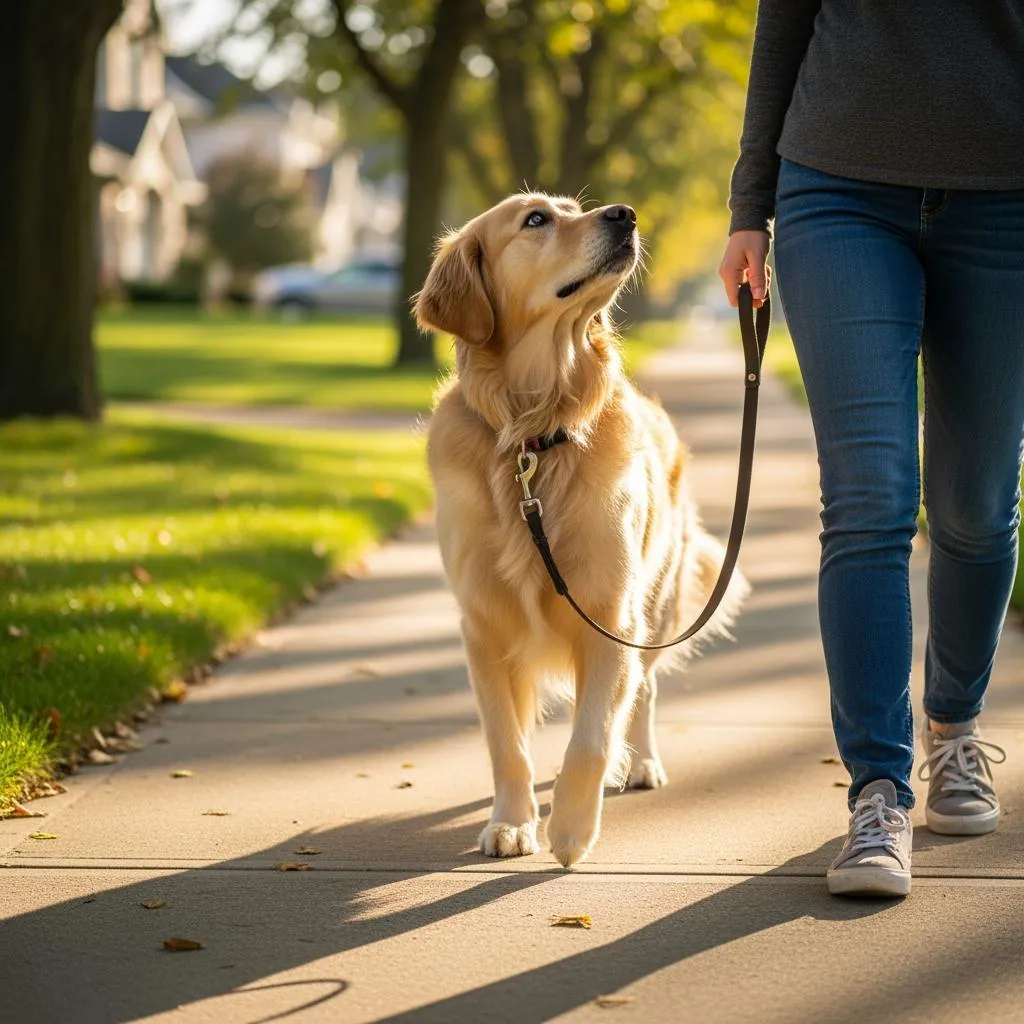
Dog walking calmly on leash beside owner on a suburban sidewalk during leash training

Why Dogs Get Leash Reactive & How to Fix It
April 03, 20268 min read

You have the sweetest dog at home. They play nicely at the dog park. They're calm, friendly, and easy to be around.

But the moment you clip that leash on and another dog appears down the street? It's like a switch flips. Lunging, barking, spinning, pulling so hard you can barely hold on. You're embarrassed. You're frustrated. And honestly, you're starting to dread walks altogether.

Here's what I want you to know right away: your dog is not aggressive. They are not "bad." And this is not your fault.

Leash reactivity is one of the most misunderstood behavior challenges I see in Metro Detroit — and it's also one of the most fixable. But to fix it, you first need to understand what's actually happening in your dog's brain when they see that other dog coming.

Why the Leash Changes Everything

Off leash, your dog has options. They can approach, sniff, play, or walk away. They can read the situation and make a choice. That freedom is enormously important to a dog's sense of safety and control.

The moment you add a leash, those options disappear.

Now when another dog appears, your dog can't do any of the things that would normally help them navigate the situation. They can't approach to investigate. They can't create distance if they're nervous. They're physically tethered, and that restriction triggers one of two very different emotional states — frustration or fear. Both look almost identical from the outside. Both result in barking, lunging, and chaos. But they require very different approaches to resolve.

This is why so many owners feel like nothing works. They're treating the symptoms — the barking and pulling — without addressing what's driving them underneath.

Frustration Reactivity vs. Fear Reactivity — Why the Difference Matters

Frustration reactivity happens when a dog desperately wants to get to the other dog — not to fight, but to greet and play. They've learned that seeing another dog is exciting, and the leash is the only thing standing between them and that fun. The frustration of being held back comes out as barking and lunging. These dogs often have loose, wiggly body language in between reactions. Their tail may be up and wagging. They're not scared — they're overstimulated.

Fear reactivity is driven by anxiety. These dogs see another dog as a potential threat and react because they feel trapped. The leash prevents them from doing what every nervous dog wants to do — create distance. So instead, they go on the offensive. Bark loud enough, lunge hard enough, and the scary thing goes away. It works, so they do it again. These dogs often show tighter, stiffer body language. They may also react to sudden sounds, strangers, or unfamiliar environments.

Knowing which one you're dealing with shapes everything about how you approach training. A frustrated greeter needs to learn that calm behavior is the path to what they want. A fearful dog needs to learn that other dogs predict good things — not danger.

A client of mine — I'll call them the Hendersons — came to me with a three-year-old lab mix named Brody. Brody had been lunging at every dog on their street for over a year. His owners had tried everything they could think of: turning around, crossing the street, even a prong collar recommended by a neighbor. Nothing helped. When we assessed Brody together, it was clear he wasn't scared — he was desperate to say hello. Every correction had actually made things worse by adding frustration on top of frustration. Once we shifted our approach, Brody started making real progress within two weeks.

What You're Probably Doing That's Making It Worse

I want to talk about two things that almost every reactive dog owner does instinctively — and that both backfire every time.

Tightening the leash. The moment you see another dog approaching, your body tenses up and your hand grips tighter. Your dog feels that tension travel right down the leash into their collar. To them, that tension signals that something is wrong — which confirms their anxiety or ramps up their frustration even further. It's an understandable reflex but it creates a feedback loop that makes the reaction bigger, not smaller.

Yelling or correcting during the reaction. Once your dog is over threshold — meaning they've hit the point of full reaction — they are not able to learn anything. Their brain is flooded. Corrections at that moment don't teach them to be calm. They either add to the emotional chaos or, over time, become associated with the presence of other dogs, making the anxiety worse.

The goal is never to manage the reaction after it starts. The goal is to prevent it from starting in the first place.

The Look at That Game — Your Starting Point

One of the most effective tools for leash reactivity is deceptively simple. It's called the Look at That game, and it works by changing what your dog thinks other dogs mean.

Right now, another dog on the horizon means something emotionally charged — either exciting or threatening. We want to change that association so that seeing another dog makes your dog think "oh good, something great is about to happen" rather than "I need to react right now."

Here is how it works:

Start at a distance where your dog notices the other dog but hasn't reacted yet. This is called working under threshold. For some dogs that distance is half a block. For others it might be across an entire field. Find your dog's threshold and work just below it.

The moment your dog glances at the other dog, mark it with a cheerful "yes" and give them a high value treat — think chicken, cheese, or hot dog. Not kibble. Something they find genuinely exciting.

Your dog looks at the dog. They get a treat. They look at the dog again. They get another treat. You are building a new reflex: other dog appears, good things happen.

Over many repetitions, in many locations, with many different dogs at varying distances, this changes the emotional response at the root level. Your dog starts to see other dogs as a signal that rewards are coming — not a trigger for chaos.

Building From There

The Look at That game is a starting point, not a complete solution. As your dog gets more consistent at noticing other dogs calmly, you gradually decrease the distance. You practice on different streets, at different times of day, with dogs of different sizes and energy levels.

Consistency matters enormously here. Every calm pass by another dog practices the right behavior. Every reaction over threshold practices the wrong one. The more you can set your dog up to succeed — by managing distance, timing your outings, and staying below threshold — the faster you'll see real change.

Some practical management tips while you're working through this:

Cross the street early — before your dog notices the other dog, not after. This keeps you under threshold and avoids the reaction entirely.

Turn and go the other direction the moment you see a dog in the distance if you're not in a position to work. There's no shame in it. Avoiding a reaction is always better than surviving one.

Ditch the retractable leash if you're using one. A fixed 4 to 6 foot leash gives you far more control and keeps the leash communication cleaner.

Watch your own energy. Your dog reads you constantly. If you tighten up and hold your breath every time another dog appears, your dog notices. Practice keeping your shoulders loose, your breathing steady, and your voice calm even when you don't feel it.

When to Bring in Help

Mild leash reactivity that started recently often responds well to consistent owner-led training. But if your dog's reactivity is severe, has been going on for years, involves snapping or redirecting onto you, or if you're genuinely nervous to walk them, that's a sign to bring in a professional sooner rather than later.

A good trainer will assess what's driving the reactivity, show you exactly how to implement the right approach for your specific dog, and help you troubleshoot in real time on actual walks. Progress with leash reactivity is absolutely possible — but the path looks different for every dog.


If your walks have become something you dread rather than enjoy, I'd love to help you change that. Leash reactivity is one of those challenges that can feel completely overwhelming — until you understand what's driving it and have the right tools to address it.

Call me at (248) 618-3258 or email [email protected] to talk through what's going on with your dog and figure out the best path forward. Our Canine Connection Compass methodology has helped hundreds of Metro Detroit dogs learn to walk past other dogs calmly — and it can work for yours too.

You and your dog both deserve to enjoy your walks. Let's make that happen.

Happy training!

Mandy Majchrzak Founder, Clever Canine Dog Training Metro Detroit's Family Dog Training Specialists

Mandy Majchrzak is the founder of Clever Canine Dog Training, bringing over a decade of professional experience and a deeply personal mission to every dog she works with.

Her path into dog training wasn't planned — it was sparked by her daughter Lizzie, who at 12 years old was diagnosed with a rare autoimmune disorder. While working with a renowned service dog trainer to support Lizzie, two things became clear: Lizzie had an extraordinary gift for training dogs, and Mandy had found her calling. What struck her most was how difficult it was to find dog training information that actually worked in real life — not quick fixes or cookie-cutter methods, but honest, practical guidance tailored to real families.

That insight became the foundation of Clever Canine. Mandy's Canine Connection Compass methodology is built on the belief that every dog, every family, and every situation is different — and that a complete toolbox of approaches will always outperform a single technique.

A mom of nine children (five adopted from foster care), AKC-certified, and fiercely judgment-free, Mandy's goal is simple: when you help a dog, you help an entire family.

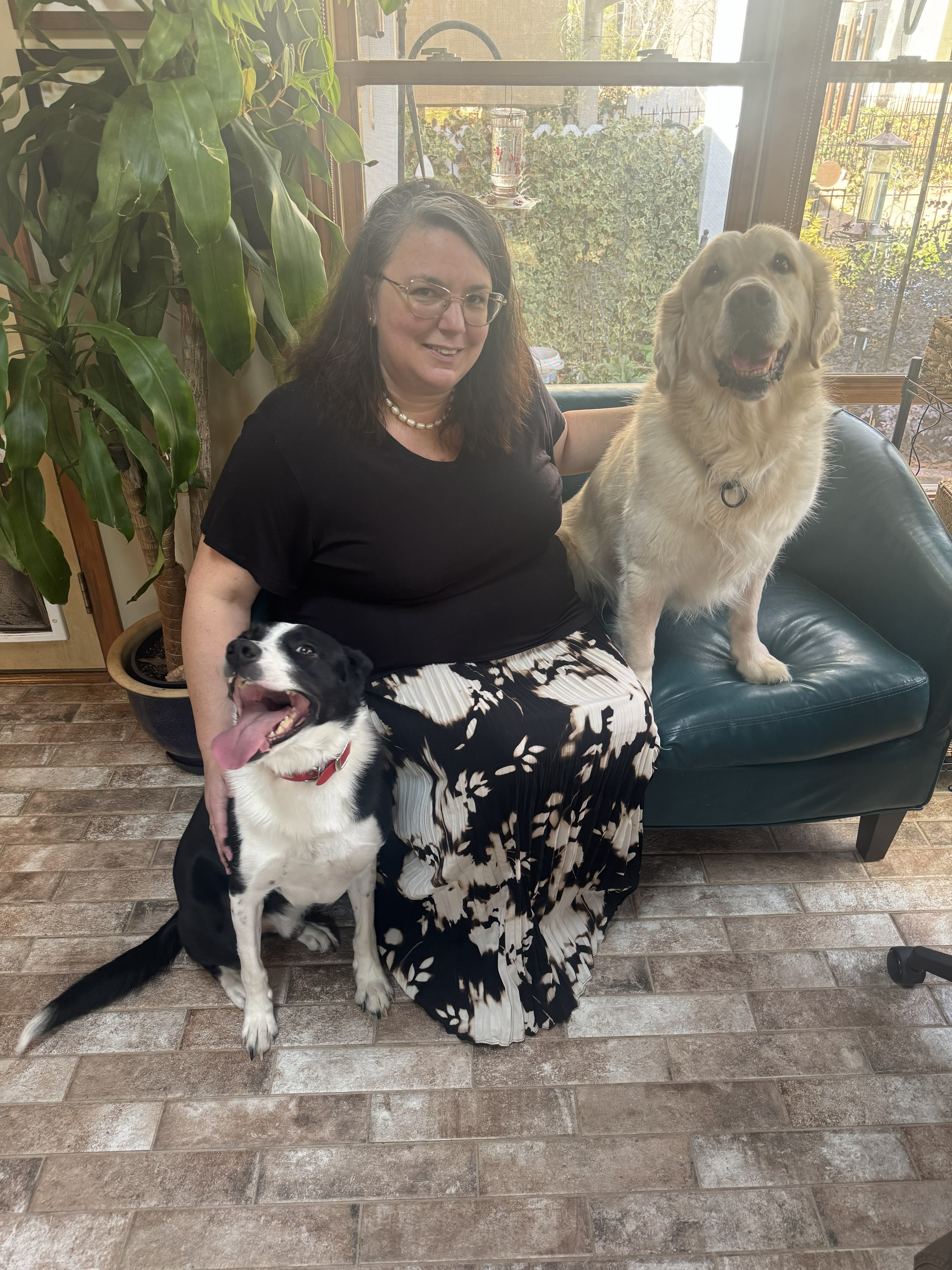
Mandy Majchrzak

Mandy Majchrzak is the founder of Clever Canine Dog Training, bringing over a decade of professional experience and a deeply personal mission to every dog she works with. Her path into dog training wasn't planned — it was sparked by her daughter Lizzie, who at 12 years old was diagnosed with a rare autoimmune disorder. While working with a renowned service dog trainer to support Lizzie, two things became clear: Lizzie had an extraordinary gift for training dogs, and Mandy had found her calling. What struck her most was how difficult it was to find dog training information that actually worked in real life — not quick fixes or cookie-cutter methods, but honest, practical guidance tailored to real families. That insight became the foundation of Clever Canine. Mandy's Canine Connection Compass methodology is built on the belief that every dog, every family, and every situation is different — and that a complete toolbox of approaches will always outperform a single technique. A mom of nine children (five adopted from foster care), AKC-certified, and fiercely judgment-free, Mandy's goal is simple: when you help a dog, you help an entire family.

Back to Blog